

Leg Pain
Aching, throbbing, cramping, or a sharp pain in the leg is one of the most common reasons people look for help. Most leg pain is harmless, but some points to a circulation or nerve problem that gets more serious over time. Here is how to tell the difference.
What leg pain feels like
Leg pain shows up in very different ways, and the pattern often points to the cause.

Circulation-related pain tends to be predictable. Pain in the calf or thigh that comes on with walking and eases within a few minutes of rest can be a sign of reduced blood flow in the arteries. A heavy, aching pain that builds through the day and improves when you put your legs up more often points to the veins. Nerve-related pain is usually described as burning, shooting, or electric, and may come with numbness or tingling.
Pay attention to where it hurts, when it hurts, and what makes it better or worse. Those three details are exactly what a specialist will ask about, and they narrow the list of causes quickly.
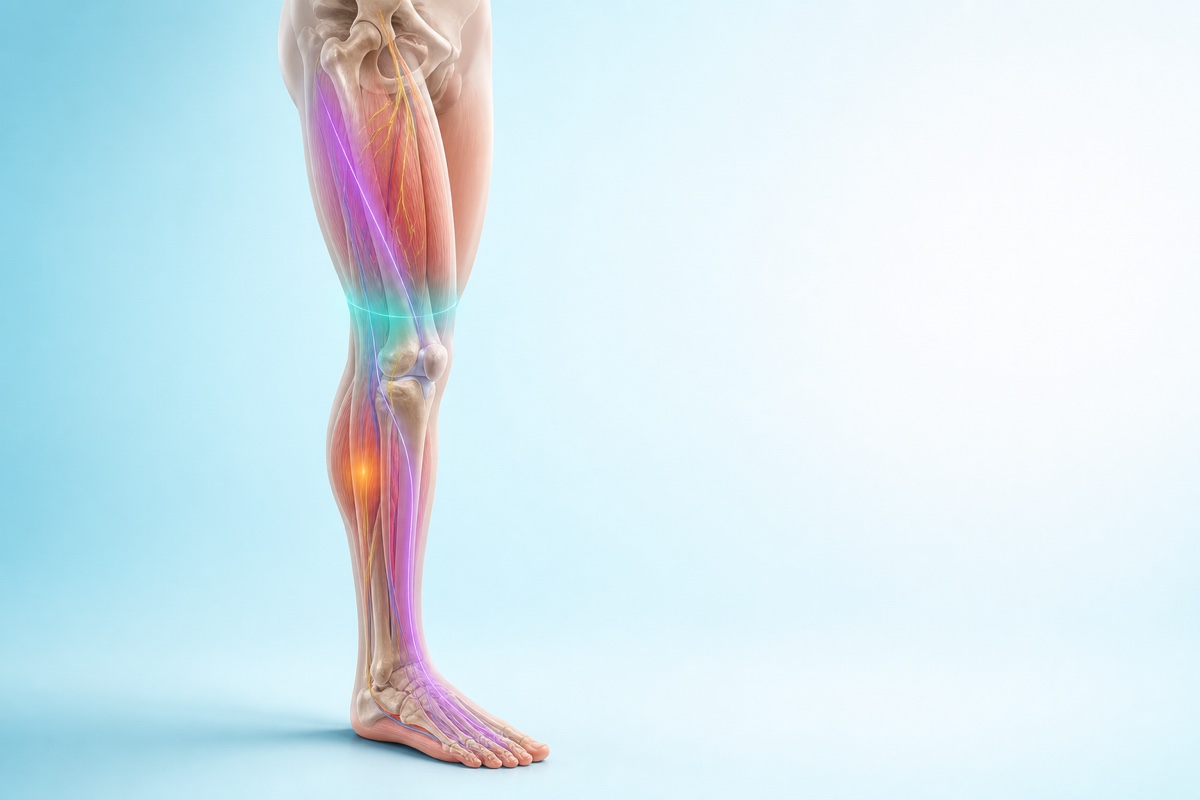
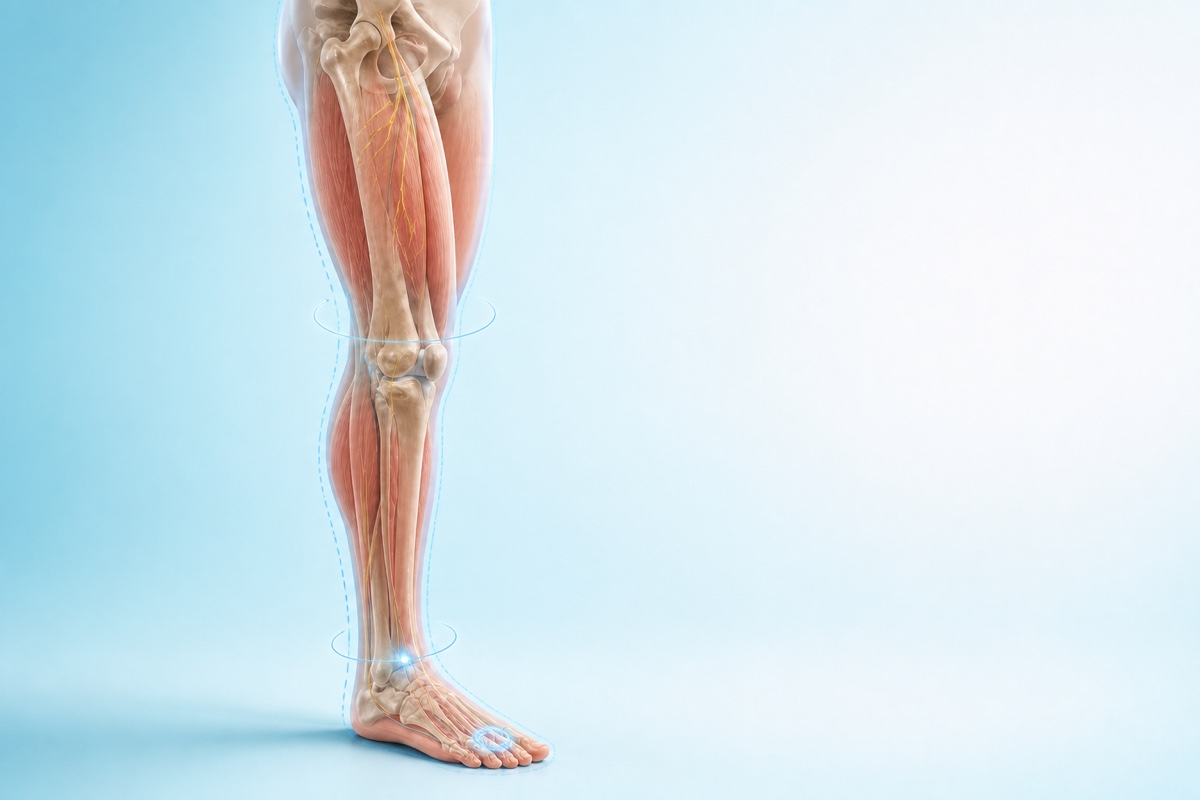
Why leg pain can feel different from person to person
Compare a pain pattern, several possible contributors, and what a clinician may assess.

Common causes of leg pain
Several of these are circulation or nerve conditions that a specialist treats. Tap any card to learn more.
Knee Osteoarthritis
Worn cartilage causes knee stiffness and pain, often worse on stairs.
Learn more →Spider Veins
Small surface veins that show as thin red or blue lines on the legs.
Learn more →Varicose Veins
Bulging, ropey veins from valves that no longer close properly.
Learn more →Deep Vein Thrombosis
A clot in a deep leg vein, which is a medical emergency.
Learn more →Peripheral Neuropathy
Nerve damage causing numbness, tingling, or burning.
Learn more →Peripheral Artery Disease
Narrowed arteries reduce blood flow, often felt as pain when walking.
Learn more →Chronic Venous Insufficiency
Poor vein return causing swelling, aching, and skin changes.
Learn more →Lymphedema
Swelling from a build-up of lymph fluid in the tissues.
Learn more →Nerve Compression
Pressure on a nerve causing tingling, pain, or weakness in the leg.
Learn more →When leg pain is an emergency
Most leg pain can wait for a regular appointment, but a few signs need urgent care. Seek emergency care now if you have:
- Sudden swelling, warmth, or pain in one leg (possible clot or DVT)
- Chest pain or shortness of breath along with leg pain
- A leg or foot that is cold, pale, or blue
- Severe pain after an injury, or a leg that looks deformed
- An open sore or wound that will not heal
- Sudden weakness or numbness in the leg
What a specialist can do
A leg and vascular specialist starts by listening to your history and examining your legs, pulses, and skin. From there, simple, painless tests can pinpoint the cause:
- Ankle-brachial index (ABI): compares blood pressure at your ankle and arm to check the arteries.
- Ultrasound: looks at blood flow in the veins and arteries without any needles.
- Physical exam and symptom review: often enough to point to a nerve or muscle cause.
Once the cause is clear, most leg pain is very treatable, often with lifestyle steps, medication, compression, or minimally invasive procedures done in an office rather than surgery. The goal is simple: get you walking comfortably again and prevent the problem from getting worse.
How Help My Legs works
Tell us your symptoms
Answer a few quick questions about your leg pain and where you feel it.
We match you locally
We connect you with a qualified leg and vascular specialist near your ZIP code.
You get seen
The office reaches out to schedule your visit. No obligation, no pressure.
Questions people ask about leg pain
Is leg pain a sign of a serious problem?
Often it is not, but leg pain that comes on with walking, wakes you at night, or comes with swelling, color changes, or numbness is worth getting checked. Those patterns can point to a circulation or nerve condition that is very treatable when caught early.
Why do my legs hurt when I walk but feel better when I stop?
Pain that reliably appears with walking and eases with rest is called claudication. It can be a sign of peripheral artery disease, where narrowed arteries cannot supply enough blood to the working muscles. It is a common and treatable condition, so it is worth having evaluated.
Should I see a doctor or wait it out?
Mild pain after activity that fades with rest can usually be watched for a week or two. See a specialist if the pain is persistent, keeps returning, happens when walking, or comes with swelling, numbness, or skin changes. Any sudden, severe, one-sided leg pain needs urgent care.
What kind of doctor treats leg pain?
Leg and vascular specialists (including vascular doctors) focus on the arteries, veins, and circulation in the legs. Help My Legs matches you with a qualified specialist near you who treats these conditions.
Ready to get your leg pain looked at?
Do not guess. Get matched with a specialist near you who can find the cause and help you feel better.
Find a Specialist Near YouLast updated August 2026