

Deep Vein Thrombosis
Deep vein thrombosis (DVT) is a blood clot in a deep vein, usually in the leg. It can cause sudden swelling and pain, and it is a medical emergency because the clot can break loose and travel to the lungs.
What is deep vein thrombosis?
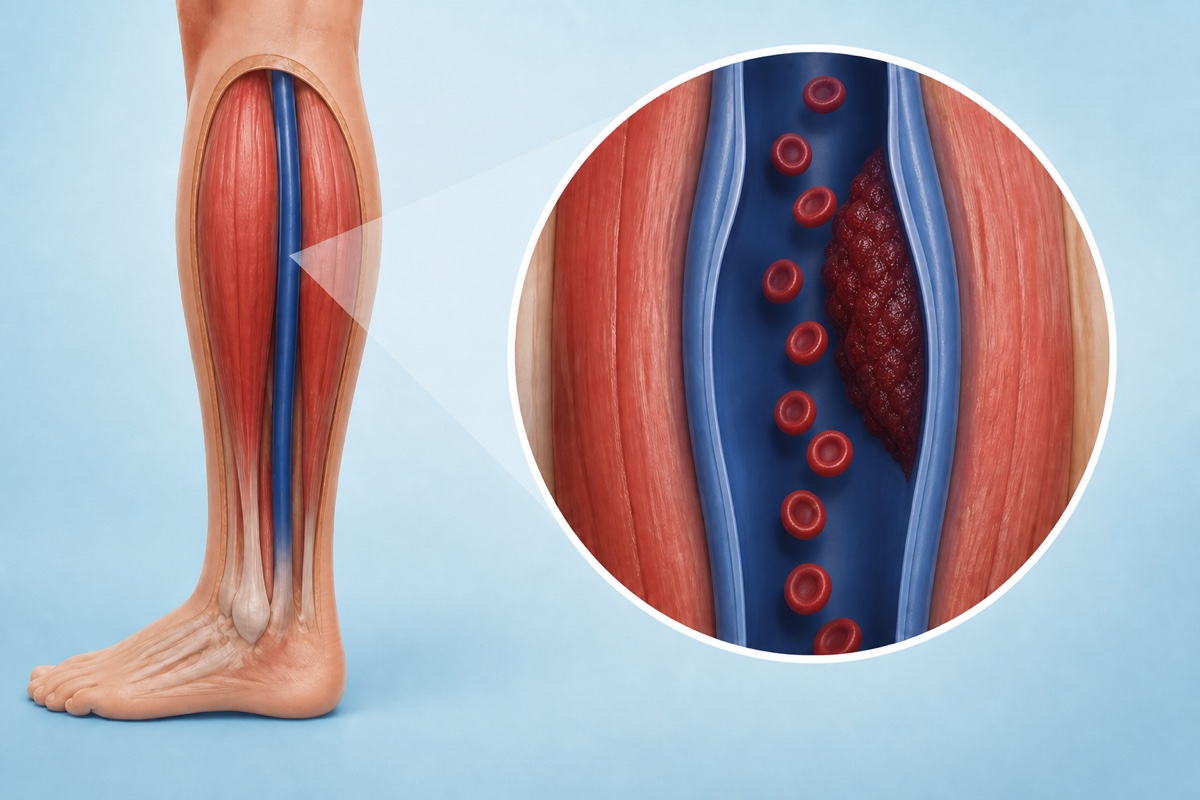
DVT is a clot that forms in one of the deep veins of the leg, blocking normal blood flow.

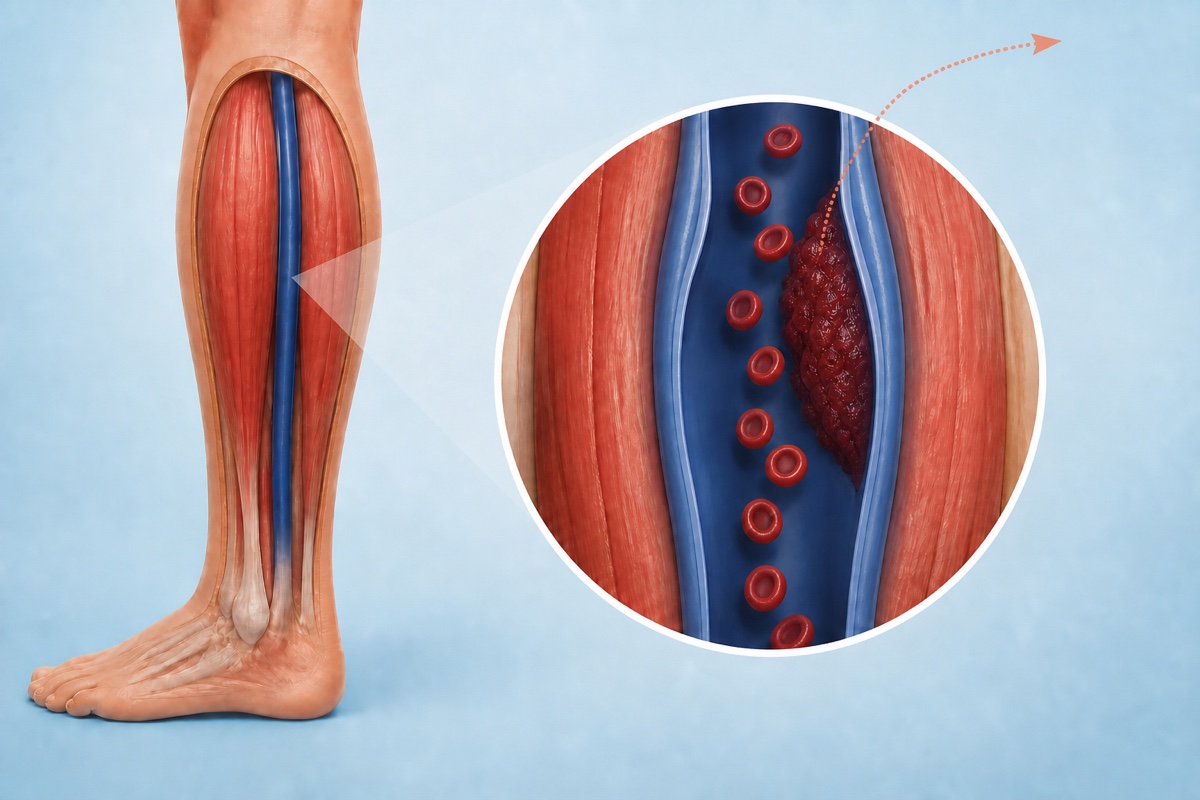
It often causes swelling, pain, warmth, and redness in one leg, though sometimes there are few symptoms. The biggest danger is that a piece of the clot can travel to the lungs, causing a pulmonary embolism, which is life-threatening.
Risk factors include long periods of immobility such as surgery, illness, or long travel, as well as certain medications, cancer, pregnancy, and inherited clotting conditions. Because of the risk, any suspected DVT should be evaluated urgently.
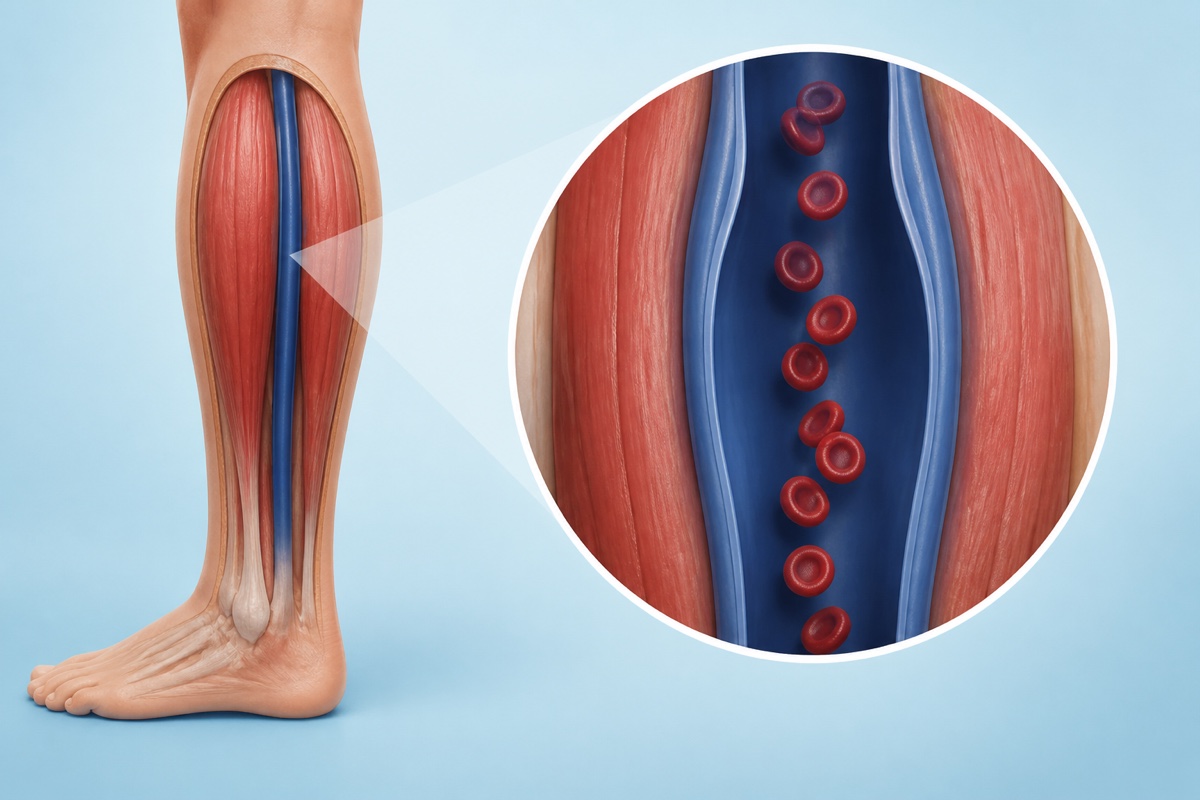
How a clot can obstruct a deep leg vein
See how a clot may narrow a deep vein and why possible DVT symptoms require urgent evaluation.
Seek emergency care now
DVT is urgent. Call your local emergency number or go to the ER if you have:
- Sudden swelling in one leg, often with pain or warmth
- Redness or a bluish color in the leg
- Calf pain or tenderness that came on quickly
- Chest pain or shortness of breath (possible clot in the lungs)
- Coughing up blood
- A fast heartbeat with any of the above
How DVT is diagnosed and treated
DVT is confirmed quickly with a painless ultrasound and sometimes a blood test. Once diagnosed, the goal is to stop the clot from growing or traveling:
- Blood thinners (anticoagulants): the main treatment to prevent the clot from spreading.
- Procedures: in select cases, a specialist may remove or dissolve the clot.
- Prevention: compression, movement, and managing risk factors reduce the chance of another clot.
With prompt treatment, most people recover well. Ongoing follow-up with a vascular specialist helps prevent recurrence.
How Help My Legs works
Tell us your symptoms
Answer a few quick questions about what you are feeling and where.
We match you locally
We connect you with a qualified leg and vascular specialist near your ZIP code.
You get seen
The office reaches out to schedule your visit. No obligation, no pressure.
Related leg symptoms
This condition can show up as one or more of these symptoms. Tap any card to learn more.
Questions people ask about DVT
How do I know if I have a blood clot?
Common signs are sudden swelling, pain, warmth, or redness in one leg. Some clots cause few symptoms. If you suspect a DVT, seek care right away, as it can be dangerous.
Why is DVT dangerous?
A piece of the clot can break off and travel to the lungs, causing a pulmonary embolism, which is life-threatening. That is why prompt evaluation and treatment matter.
What raises the risk of a clot?
Long immobility such as surgery or travel, certain medications, cancer, pregnancy, and inherited clotting disorders all increase the risk.
How is DVT treated?
The main treatment is blood thinners to stop the clot from growing or traveling. Some cases need a procedure. A specialist also helps prevent future clots.
Concerned about a blood clot?
If you have sudden one-leg swelling and pain, seek urgent care now. For follow-up and prevention, get matched with a vascular specialist near you.
Find a Specialist Near YouLast updated September 2026