

Chronic Venous Insufficiency
Chronic venous insufficiency (CVI) happens when the leg veins cannot return blood to the heart efficiently, so blood pools in the legs. It causes swelling, aching, heaviness, and skin changes, and it is very treatable.
What is chronic venous insufficiency?
CVI develops when the valves in the leg veins weaken, letting blood flow backward and collect in the lower legs.
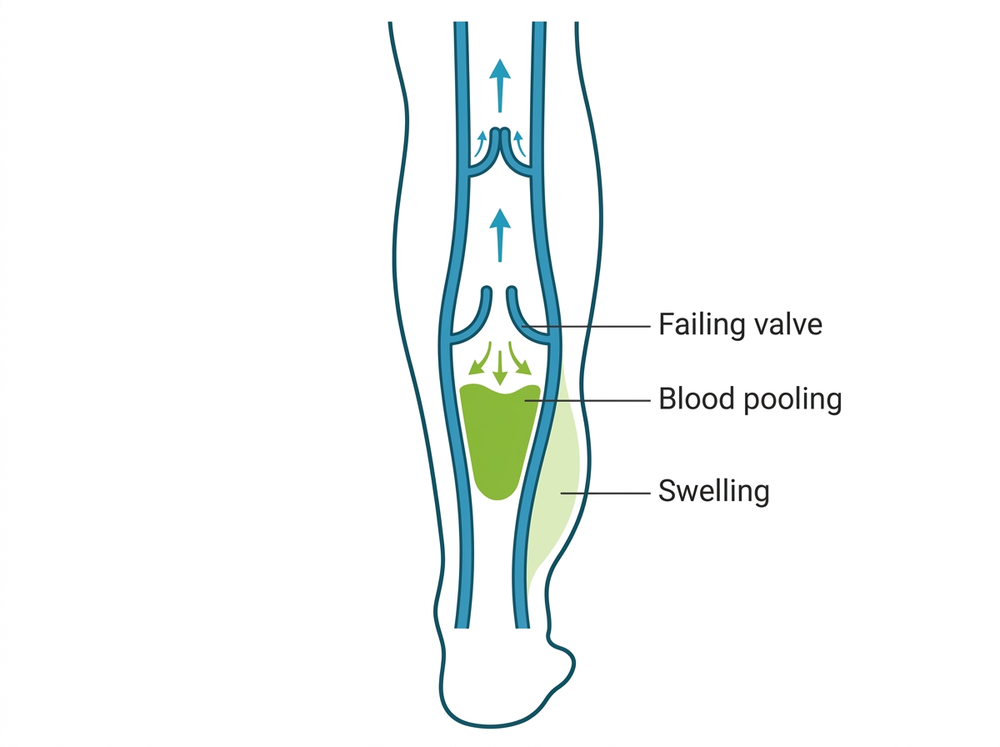
This pooling raises pressure in the veins and leads to swelling, aching, heaviness, and tiredness that are worse after standing and better with elevation. Over time it can cause visible varicose veins, itching, skin darkening near the ankle, and in some cases open sores called venous ulcers.
Risk factors include family history, age, pregnancy, prior blood clots, and long periods of standing. CVI is progressive, so treating it earlier tends to give better, easier results.
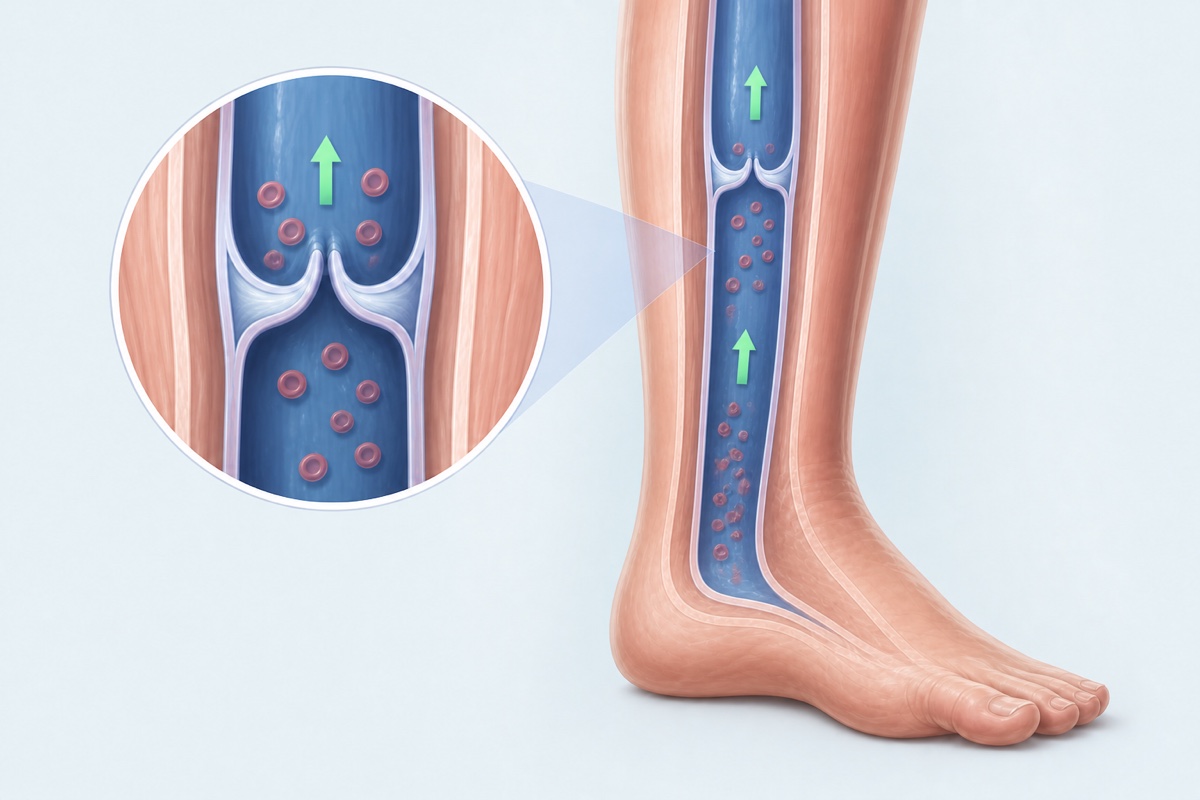
How weak vein valves cause swelling
Compare healthy one-way return with venous reflux to see why pressure can build near the ankle.

When CVI needs prompt care
CVI is usually not an emergency, but seek prompt care if you have:
- An open sore or ulcer near the ankle
- Skin that is red, hot, and tender (possible infection)
- Sudden swelling and pain in one leg (possible clot or DVT)
- Bleeding from a varicose vein
- Rapidly worsening swelling or skin changes
- Darkening or hardening of the skin around the ankle
How CVI is treated
A specialist confirms CVI with a painless ultrasound that shows how the veins and valves are working, then tailors treatment:
- Compression and elevation: the foundation for easing swelling and heaviness.
- Endovenous ablation: closes the faulty vein so blood reroutes through healthy veins.
- Skin and wound care: to heal and prevent ulcers when the skin is affected.
Most treatments are minimally invasive, done in an office, and can relieve symptoms while protecting the skin from long-term damage.
How Help My Legs works
Tell us your symptoms
Answer a few quick questions about what you are feeling and where.
We match you locally
We connect you with a qualified leg and vascular specialist near your ZIP code.
You get seen
The office reaches out to schedule your visit. No obligation, no pressure.
Related leg symptoms
This condition can show up as one or more of these symptoms. Tap any card to learn more.
Leg Pain
Aching, throbbing, or pain when walking.
Leg Cramps
Sudden, tight muscle spasms.
Leg Swelling
Puffy ankles, feet, or calves.
Restless Legs
Urge to move, worse at night.
Numbness / Tingling
Pins and needles or loss of feeling.
Burning Sensation
Hot or searing feeling in the legs.
Heavy Legs
Tired, aching, weighed-down legs.
Read more about vein problems
A longer guide on what is behind that end-of-day ache.
Questions people ask about CVI
What is the difference between varicose veins and CVI?
Varicose veins are visible, bulging veins. CVI is the broader problem of the vein valves not working well, which can cause varicose veins along with swelling, heaviness, and skin changes.
What are the signs of CVI?
Swelling, aching, heaviness, and tiredness that are worse after standing and better with elevation, plus skin changes or ulcers near the ankle in more advanced cases.
How is CVI treated?
Compression and elevation are the foundation, and minimally invasive procedures like endovenous ablation can close faulty veins. Skin care helps prevent ulcers.
Will CVI get worse without treatment?
It tends to be progressive, so symptoms and skin changes can worsen over time. Treating it earlier usually gives better results.
Swelling, aching, and heavy legs?
Get matched with a specialist near you who can evaluate your veins and relieve the symptoms.
Find a Specialist Near YouLast updated August 2026