

Leg Cramps
A leg cramp is a sudden, involuntary tightening of a muscle, most often in the calf. Most cramps are harmless and pass within seconds or minutes, but frequent night cramps or cramps that come on when you walk can point to a circulation problem worth checking.
What leg cramps feel like
A cramp grips the muscle hard and suddenly, and the muscle can feel knotted or tender for a while afterward.

Most cramps are harmless and trace back to everyday causes such as dehydration, low levels of minerals like potassium or magnesium, muscle overuse, or long periods of standing. Cramps that happen at night are very common as we get older and are usually not dangerous.
The National Library of Medicine takes the same view of the ordinary kind, noting that: muscle cramps are usually harmless, and they go away after a few minutes.
The pattern matters. Cramping in the calf that reliably starts when you walk and eases when you rest can be a sign of peripheral artery disease, where narrowed arteries cannot supply enough blood to the working muscle. Cramps that come with swelling, skin changes, or that only affect one leg are also worth having checked.
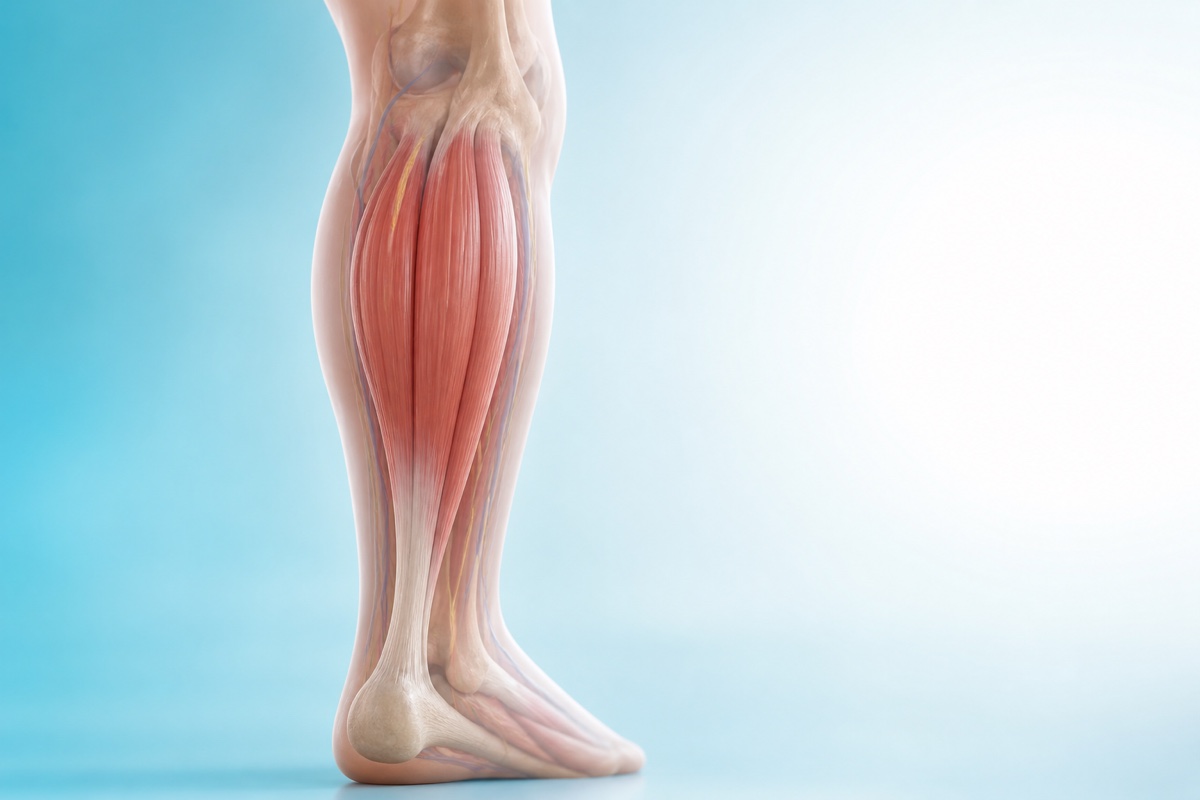
What happens when a leg muscle cramps
See a relaxed calf, a bounded area of sudden tightening, and the pattern a clinician may assess.


Common causes of leg cramps
Several of these are circulation or nerve conditions that a specialist treats. Tap any card to learn more.
Varicose Veins
Bulging, ropey veins from valves that no longer close properly.
Learn more →Deep Vein Thrombosis
A clot in a deep leg vein, which is a medical emergency.
Learn more →Peripheral Neuropathy
Nerve damage causing numbness, tingling, or burning.
Learn more →Peripheral Artery Disease
Narrowed arteries reduce blood flow, often felt as pain when walking.
Learn more →Chronic Venous Insufficiency
Poor vein return causing swelling, aching, and skin changes.
Learn more →Nerve Compression
Pressure on a nerve causing tingling, pain, or weakness in the leg.
Learn more →When a leg cramp needs attention
Most cramps are harmless. Seek prompt care if a cramp comes with any of these:
- Sudden swelling, warmth, or pain in one leg (possible clot or DVT)
- Cramping that only appears when you walk and eases with rest
- Skin that is red, hot, or discolored over the muscle
- A leg or foot that is cold, pale, or blue
- Numbness or weakness in the leg
- Cramps that started after a new medication
What a specialist can do
A leg and vascular specialist will ask when your cramps happen and what brings them on, then examine your legs, pulses, and skin. Depending on the pattern, simple, painless tests can rule a circulation cause in or out:
- Ankle-brachial index (ABI): checks the arteries when cramps come on with walking.
- Ultrasound: looks at blood flow in the veins and arteries without any needles.
- Symptom and medication review: often points to a benign or treatable cause.
If the cause is benign, simple steps like staying hydrated, stretching, and gentle activity usually help. If a circulation condition is found, it is very treatable, often without surgery.
How Help My Legs works
Tell us your symptoms
Answer a few quick questions about what you are feeling and where.
We match you locally
We connect you with a qualified leg and vascular specialist near your ZIP code.
You get seen
The office reaches out to schedule your visit. No obligation, no pressure.
Questions people ask about leg cramps
Why do I get leg cramps at night?
Night cramps are very common and usually harmless. They can be linked to dehydration, mineral levels, long days on your feet, certain medications, and normal aging. If they are frequent or severe, or come with swelling or numbness, it is worth having them checked.
Are leg cramps a sign of poor circulation?
They can be. Cramping in the calf that reliably starts when you walk and stops when you rest can be a sign of peripheral artery disease. A simple test can check the circulation in your legs.
How can I stop a cramp quickly?
Gently stretch and massage the muscle, stand and walk if you can, and flex your foot upward toward your shin. Warmth can help the muscle relax. If cramps keep returning, talk to a specialist.
When should I see a doctor about cramps?
See a specialist if cramps are frequent, only affect one leg, come on with walking, or come with swelling, numbness, or skin changes. Any sudden one-sided swelling with pain needs urgent care.
Cramps that keep coming back?
You do not have to live with them. Get matched with a specialist near you who can find the cause and help.
Find a Specialist Near YouLast updated September 2026