

Relief for Leg Pain & Poor Circulation
If cramping, aching, or tired legs are slowing you down, a simple procedure can reopen narrowed arteries and get blood flowing again. There is no open surgery, no large incisions, and most people go home the same day.
What this treatment is
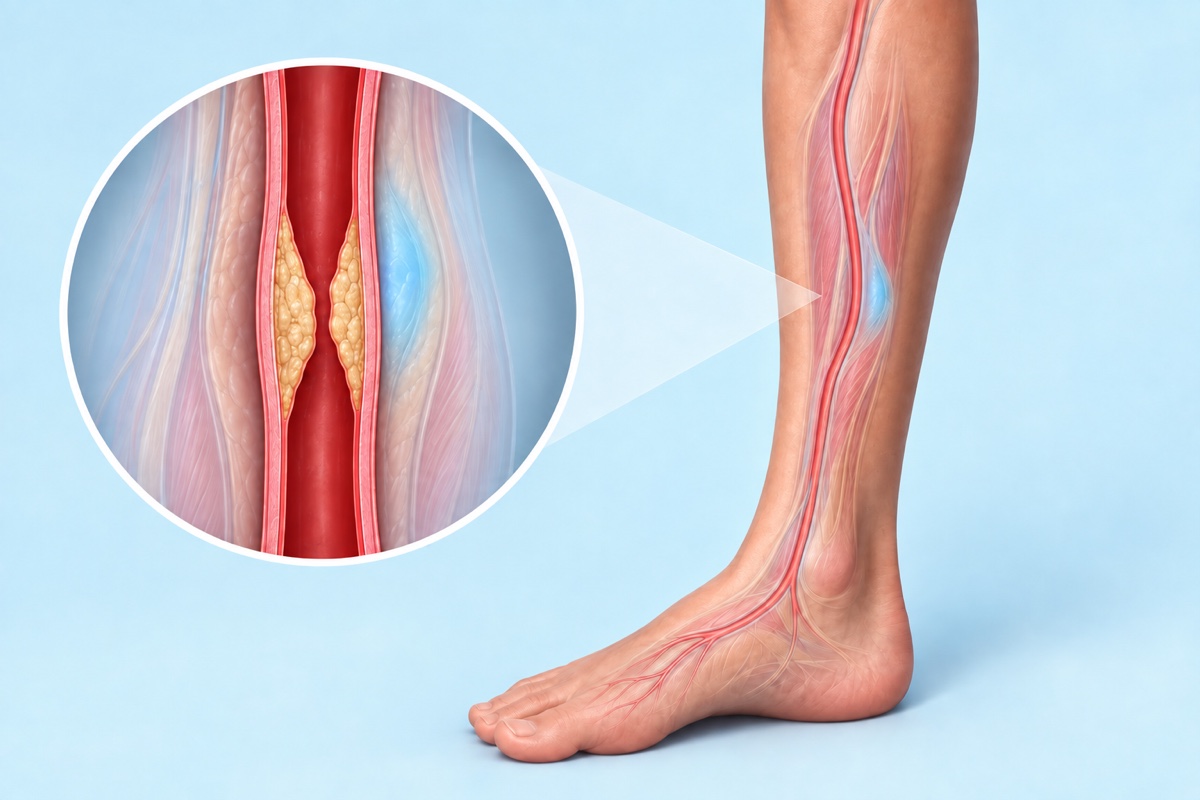
It is a modern, minimally invasive way to restore blood flow in legs affected by peripheral artery disease (PAD), when the arteries have become narrowed by plaque.
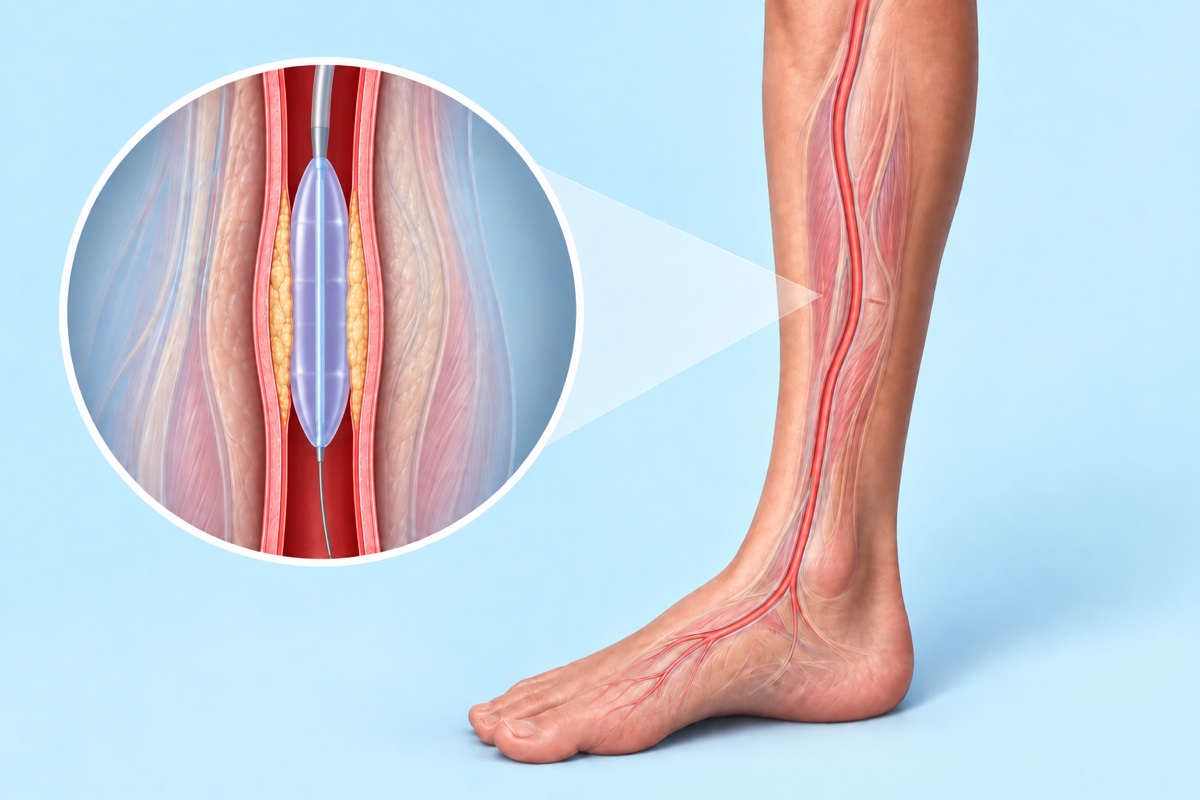
Instead of open surgery, the specialist works through a tiny pinhole in the skin using a thin, flexible tube called a catheter. Guided by live imaging, they gently widen the narrowed artery from the inside with a small balloon, and sometimes place a tiny mesh support called a stent to keep it open.
Because there is no large cut and no general anesthesia, the whole visit is usually short, comfortable, and done on an outpatient basis. Most people are back to their normal day soon after.
How the treatment works
Four simple steps, start to finish, usually in about an hour.
- 1
Numb the area
A small spot of local anesthetic numbs the skin. You stay awake but relaxed and pain-free.
- 2
Guide the catheter
A thin, flexible tube is threaded to the narrowing, guided by live X-ray imaging.
- 3
Reopen the artery
A small balloon gently widens the artery. A tiny stent may be placed to hold it open.
- 4
Blood flows freely
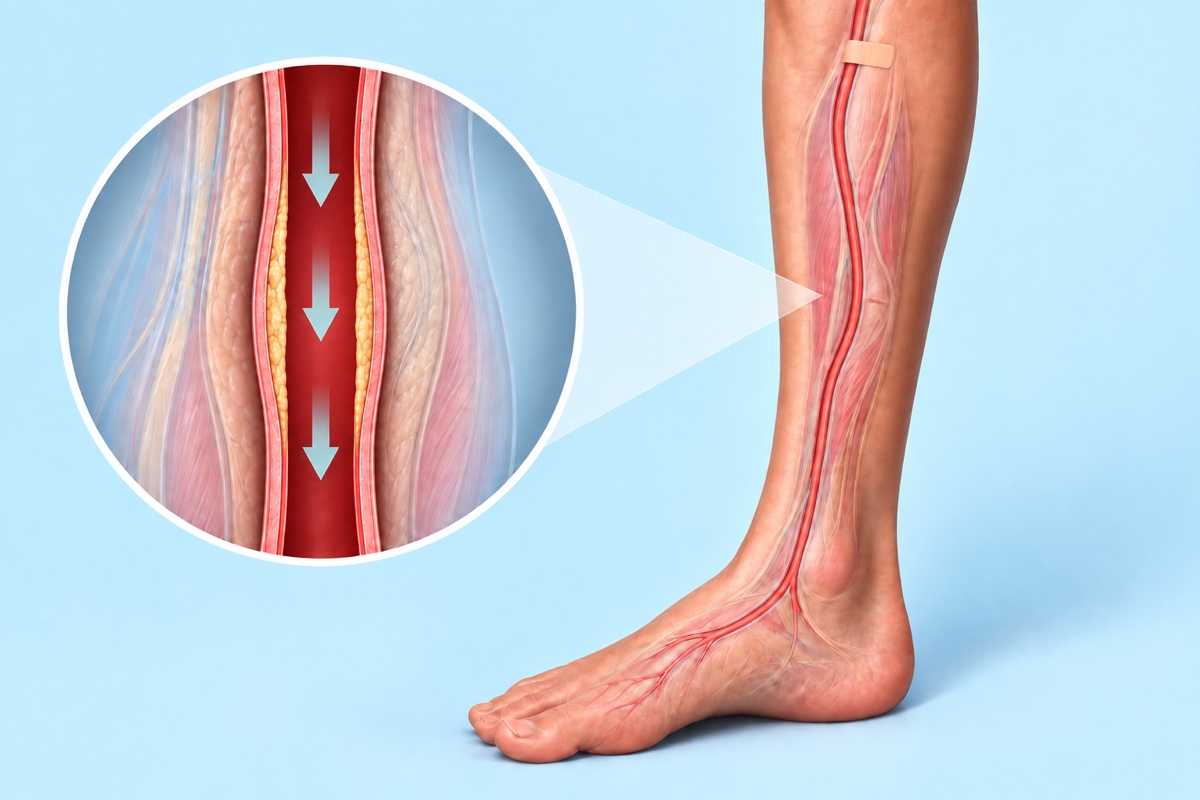
The tube is removed, leaving only a small bandage. Circulation is restored and you head home.
How treatment can improve arterial flow
Explore four stages of a representative balloon angioplasty. The approach depends on the artery and the individual.

Why patients choose it
The benefits that put people at ease.
No open surgery
Everything is done through a tiny pinhole, not a large incision.
Awake, no general anesthesia
Just local numbing keeps you comfortable with an easier recovery.
Quick and outpatient
The procedure often takes about an hour, with no hospital stay.
Fast recovery
Most people return to normal activities within a few days.
Real relief
Restoring blood flow eases pain and helps you walk farther.
Protects your legs
Better circulation lowers the risk of wounds and serious complications.
A simpler alternative to open surgery
How this minimally invasive treatment compares with traditional bypass surgery.
| Minimally invasive treatment | Traditional open surgery |
|---|---|
| Tiny pinhole, no large incision | Larger incisions to reach the artery |
| Local anesthesia, you stay awake | General anesthesia |
| Usually home the same day | A hospital stay is common |
| Recovery in days, not weeks | Longer recovery time |
Your specialist will confirm which option is right for you. Many people with PAD are good candidates for the minimally invasive approach.
Before the procedure: what a specialist checks
A procedure is never the first step. Before anyone opens an artery, they confirm that it is the right thing to do and that it is likely to help you specifically.
The visit starts with what your symptoms actually stop you doing. Not how bad the pain sounds, but what it costs you: the walk you have quietly given up, the errand you now drive to, the distance you can manage before you have to stop. That functional loss carries more weight than any single number, and most people underreport it.
Two simple tests follow. An ankle-brachial index compares the blood pressure at your ankle with the pressure in your arm, takes a few minutes with a cuff, and shows how much flow is being lost. If it reads borderline, it may be repeated after walking on a treadmill, because some narrowings only reveal themselves under load. An ultrasound then shows where the narrowing sits and how far it runs.
That last detail matters more than most people expect. A short, contained narrowing in a larger artery high in the leg responds very well to this treatment. A long stretch of disease running down into the smaller vessels below the knee is a harder problem and sometimes points elsewhere. Same diagnosis, different answer, which is why the scan comes before the plan. Our article on who is a candidate for PAD treatment goes through what a specialist weighs.
What the results actually look like
Most people notice they can walk further before the pain starts, and many notice it within days rather than weeks.
That is the honest headline. Here is the rest of it, because a page that only lists benefits is not much use to someone making a real decision.
Reopening an artery restores blood flow through that artery. It does not cure the underlying condition. Peripheral artery disease is a whole-body narrowing of arteries, and the same process that narrowed your leg is usually at work elsewhere. Treating the leg does not treat the cause.
Treated arteries can also narrow again over time. How likely that is depends heavily on what was treated: short narrowings in the larger arteries tend to hold their result well, while long segments in the small vessels below the knee are less reliable. Your specialist can tell you which category you are in, and it is a fair question to ask before you agree to anything.
What protects the result is unglamorous and it is the same list as before the procedure. Walking regularly, not smoking, and staying on the medicines that control blood pressure, cholesterol and blood sugar. Those are also what protect your heart and brain, which is the part of this that has nothing to do with your legs. If symptoms start creeping back, say so early rather than waiting for the next scheduled visit.
Risks, stated plainly
This is a low-risk procedure. Low is not the same as none, and you are entitled to hear the risks by name rather than in general terms.
The common ones are minor. Bruising, soreness and a small amount of bleeding where the catheter went in are usual and settle on their own. A larger bruise under the skin is less common and occasionally needs watching.
The procedure uses contrast dye to make the arteries visible on imaging. That dye is processed by your kidneys, so kidney function is checked beforehand, and people with reduced kidney function need extra precautions rather than being ruled out.
Less common problems include injury to the artery wall, a clot forming at the treated site, or bleeding that needs repair. Rarely, circulation in the leg can be worse afterwards rather than better. These are uncommon in experienced hands, and part of what you are choosing when you choose a specialist is how often they do this.
Risk is not spread evenly. Diabetes, reduced kidney function and continued smoking all raise it, and all three are worth an honest conversation before the day rather than after it.
When a different approach is the better one
Sometimes the right answer is not this procedure, and a specialist who tells you so is doing their job rather than turning you away.
If your symptoms are mild and your life is not smaller because of them, a supervised walking program is usually recommended first. It reliably improves how far people can walk before pain starts, and it carries none of the risks above. Being asked to try it is not a brush-off.
If the disease runs in long segments or sits mainly in the small vessels below the knee, bypass surgery sometimes holds its result better, even though it is the bigger operation. The choice there is about durability, not about how invasive anyone feels like being.
And if you have pain in your toes or forefoot at rest, particularly at night, or a sore below the ankle that is not healing, that is a different and more urgent situation. It needs prompt vascular assessment rather than a routine appointment. Our article on leg pain when walking covers how to tell the patterns apart.
How Help My Legs works
Tell us your symptoms
Answer a few quick questions about what you are feeling and where.
We match you locally
We connect you with a qualified leg and vascular specialist near your ZIP code.
You get seen
The office reaches out to schedule your visit. No obligation, no pressure.
Common questions
Does it hurt?
Most people feel little more than a small pinch from the numbing medicine. You stay awake and comfortable, and the specialist keeps you at ease the whole time.
How long does recovery take?
Because there is no large incision, recovery is usually quick. Many people are back to light daily activities within a day or two and feel the benefit of better circulation soon after.
Is it really not major surgery?
Correct. It is done through a tiny pinhole with local anesthesia, not an open operation. That is why it is considered minimally invasive and is typically an outpatient visit.
How do I know if I am a candidate?
A specialist will review your symptoms and do simple, painless tests such as an ultrasound. Many people with narrowed leg arteries are good candidates. The consultation is the best place to find out.
How long does the result last?
It varies, and the honest answer depends on what was treated. Short narrowings in the larger arteries of the thigh tend to hold their result well. Long segments, or disease in the smaller vessels below the knee, are less reliable and can narrow again over time. Ask your specialist which category your blockage falls into, because they will know from the ultrasound and it is a fair question.
What are the risks?
They are low but not zero. Bruising and soreness at the puncture site are common and settle on their own. The contrast dye used for imaging is processed by the kidneys, so kidney function is checked first. Less commonly there can be injury to the artery, a clot at the treated site, or bleeding that needs repair. Diabetes, reduced kidney function and continued smoking all raise the risk, and each is worth discussing before the day.
Ready to get blood flowing again?
Schedule a consultation with a specialist near you and learn whether this simple treatment is right for your legs.
Find a SpecialistLast updated September 2026