
Leg pain when walking is easy to write off, until it happens the same way every time. You’re a block or two in when it starts: a tight, tired ache in your calf, maybe your thigh, that builds the longer you keep going. Stop and rest for a few minutes and it eases off, almost like it was never there. Start walking again and it comes right back, same spot, same distance.
If that sounds familiar, you’re not imagining it, and it’s not “just getting older.” Legs that ache reliably with walking and ease with rest are trying to tell you something specific about how blood is reaching your muscles.
What leg pain when walking is actually telling you
When you walk, the muscles in your legs ask for more blood, the same way your lungs ask for more air. Healthy arteries widen to meet that demand without you noticing.
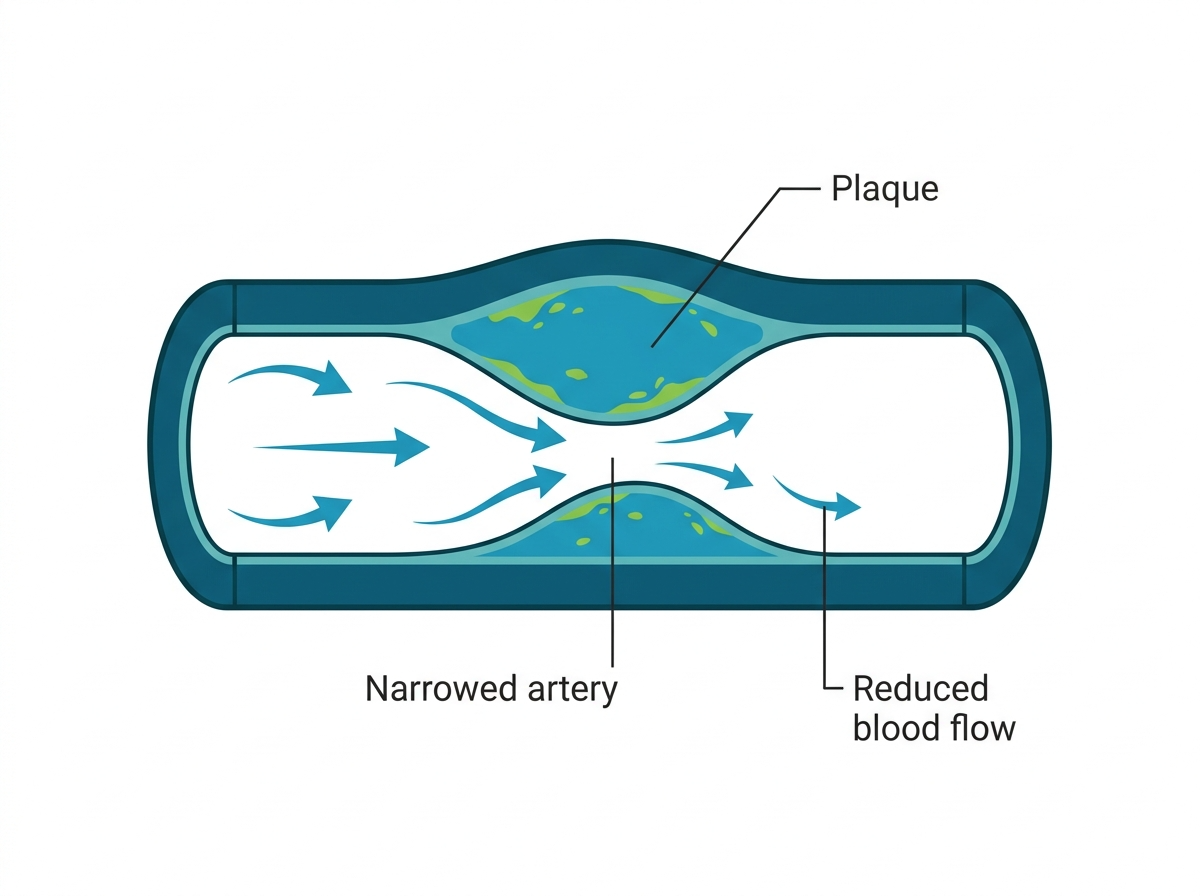
If an artery has narrowed, from a buildup of plaque along its walls, it can still supply enough blood while you’re resting. But once you start moving and your muscles ask for more, the narrowed artery can’t keep up. That gap between what your muscle needs and what the artery can deliver is what you feel as the ache, tightness, or cramping. Rest lowers the demand, the gap closes, and the pain fades.
This pattern has a clinical name, claudication, and the underlying cause is usually peripheral artery disease (PAD), a narrowing of the arteries that carry blood to your legs. You don’t need the term to know something is wrong. It’s just the word a doctor will use once they confirm what your legs have already been telling you.
Why this happens
PAD develops the same way arterial narrowing develops elsewhere in the body. Plaque, made up of fat, cholesterol, and other substances, builds up gradually along artery walls. Several things speed that up:
- Smoking, current or past, is the single biggest risk factor
- Diabetes, which affects blood vessels throughout the body
- High blood pressure and high cholesterol
- Age, especially past 60
- A personal or family history of heart disease or stroke
According to the National Heart, Lung, and Blood Institute, PAD is also connected to your heart and brain, not just your legs. The same narrowing that limits blood flow to your calf can be happening in the arteries feeding your heart. That’s part of why it’s worth taking seriously even if walking pain is the only symptom you’ve noticed so far.
PAD doesn’t always show up only as walking pain. Some people notice cold feet or a foot that feels colder than the other, and some notice cramping that lingers longer than a normal muscle cramp. If either of those sounds familiar alongside the walking pain, it’s worth mentioning both to your doctor.
When to see a specialist
Most PAD starts exactly the way we described above: predictable leg pain when walking that eases with rest. That’s worth a conversation with a doctor, not an emergency room visit.
Some signs mean you shouldn’t wait:
- Pain in your foot or leg even while resting, especially at night
- A sore or wound on your foot or leg that isn’t healing
- A leg or foot that suddenly turns pale, cold, or blue
Those can signal that blood flow has dropped low enough to put the leg itself at risk, and they need attention sooner rather than later.
How Help My Legs works
Tell us your symptoms
Answer a few quick questions about your leg pain and where you feel it.
We match you locally
We connect you with a qualified leg and vascular specialist near your ZIP code.
You get seen
The office reaches out to schedule your visit. No obligation, no pressure.
What treatment can look like
PAD is manageable, and for most people, leg pain when walking doesn’t mean surgery right away. A typical plan starts with the things that slow or stop the underlying plaque buildup: quitting smoking, a structured walking program (which sounds counterintuitive, but it actually trains your body to use blood flow more efficiently), and medication to manage blood pressure, cholesterol, or blood sugar.
When symptoms are more advanced, or lifestyle and medication aren’t enough, minimally invasive procedures can open a narrowed artery back up, often through a small catheter rather than open surgery. You can read more about what that involves, including what recovery looks like, on our circulation treatment page.
The right path depends on how far things have progressed, which is something only an exam can tell you, not a symptom checklist.
It might not be your arteries
Leg pain when walking is a strong PAD signal, but your legs have more than one way of complaining, and it’s worth being honest that other things can look similar.
Vein problems can cause aching, heavy legs, especially by the end of the day. Nerve irritation can cause a similar-sounding leg pain that doesn’t always ease neatly with rest. If your pattern doesn’t quite match what we’ve described, it’s worth reading about chronic venous insufficiency or varicose veins as well, so you walk into an appointment with a clearer picture either way.
Not sure which one sounds like you? Our quick candidate check asks a few short questions and points you toward what’s likely going on.
Questions people ask
Is leg pain when walking always PAD?
Not always, but leg pain when walking is the most common explanation when the pain is predictable, comes on with activity, and eases with a few minutes of rest. Vein and nerve conditions can look similar, which is why an exam matters.
How far do I need to walk before it counts?
There’s no fixed distance. What matters is the pattern: the pain shows up reliably at roughly the same point in your walk and improves with rest. Some people notice it after one block, others after ten.
Can PAD go away on its own?
The artery narrowing itself doesn’t reverse without treatment, but symptoms can improve significantly with a walking program, quitting smoking, and managing blood pressure, cholesterol, and blood sugar. Left unaddressed, PAD tends to progress rather than resolve.
Is this an emergency?
Pain that comes with walking and eases with rest usually is not. Pain at rest, a non-healing sore, or a leg that suddenly turns pale, cold, or blue is different and needs prompt attention.