

Knee Osteoarthritis
Knee osteoarthritis is the gradual breakdown of the cartilage that cushions your knee joint. The classic sign is stiffness and aching that gets worse on stairs and after long periods of standing. It is common, and it does not automatically mean surgery.
What is knee osteoarthritis?
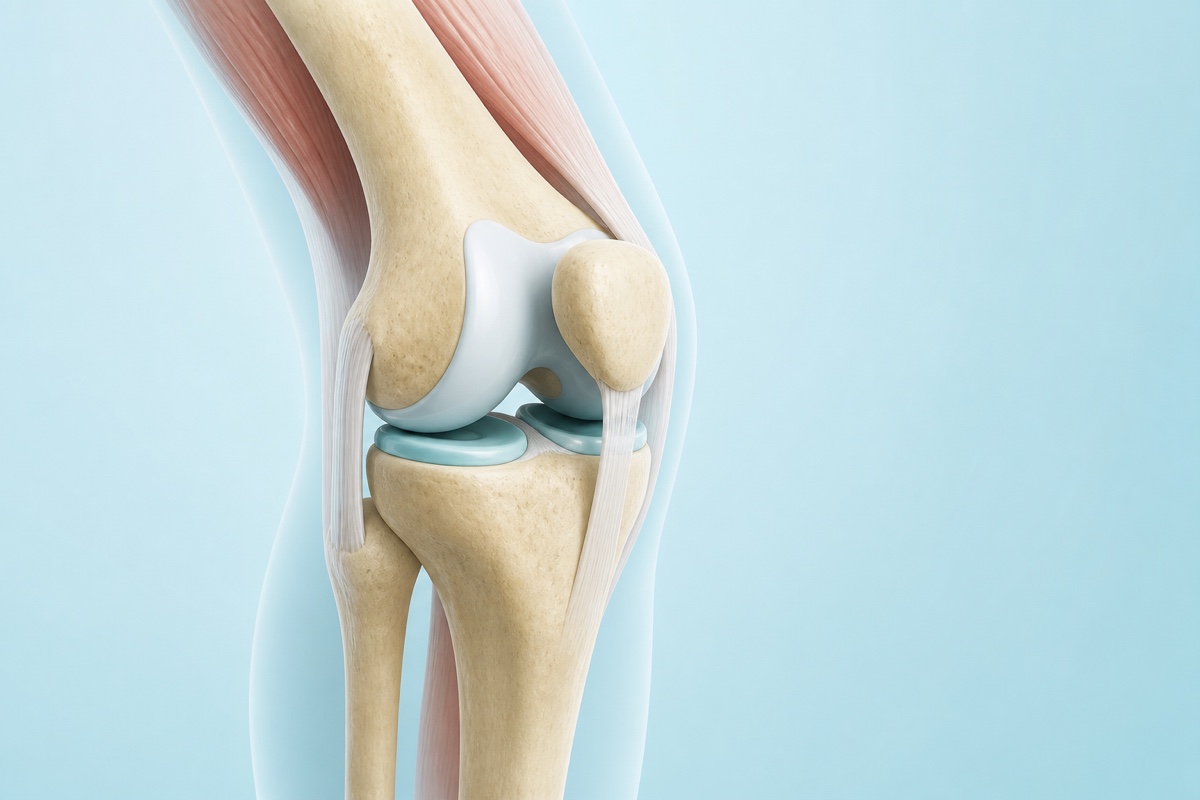
Knee osteoarthritis (knee OA) happens when the smooth cartilage that lets your knee bones glide against each other wears down over time.

As that cushioning thins, bone can begin to move closer to bone with every step, which is what produces the stiffness, aching, and grinding sensation many people describe. Pain is usually worse with activity, especially stairs, kneeling, or standing for long stretches, and eases somewhat with rest. Morning stiffness is common too, though it typically loosens up within 30 minutes of moving around.
Risk factors include age, a past knee injury, extra weight on the joint, repetitive knee strain from work or sport, and family history. Knee OA tends to progress slowly over years, which is exactly why it responds well to being managed early rather than waited out.
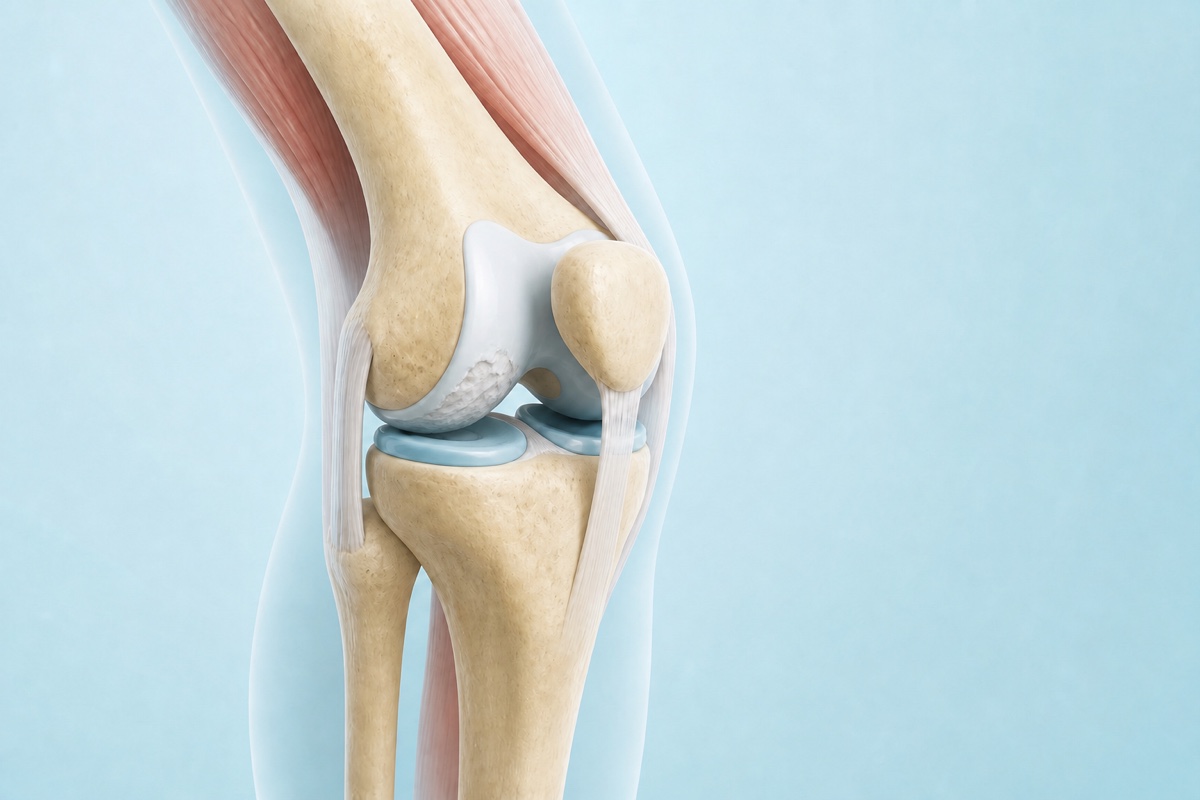
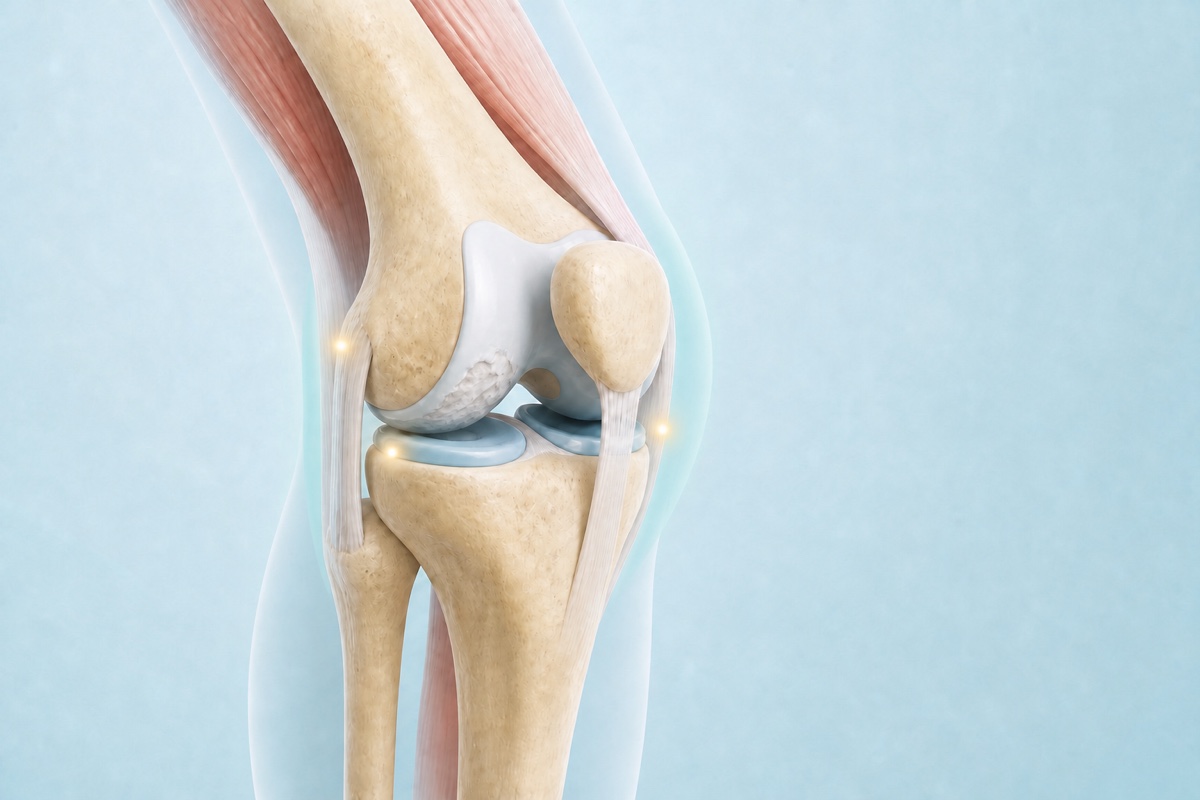
How knee osteoarthritis can change the joint
Follow the same knee through three stages to see how cartilage changes may affect movement and comfort.
When knee pain needs urgent care
Most knee osteoarthritis is not an emergency. Seek emergency care now if you have:
- A knee that suddenly can’t bear any weight after an injury
- Visible deformity or the joint looks out of place
- Fever with a hot, red, and swollen knee (possible joint infection)
- A knee that locks and will not bend or straighten
- Sudden, severe swelling right after an injury
- Signs of a blood clot: one calf swollen, warm, and painful
How knee osteoarthritis is diagnosed and treated
Knee OA is usually diagnosed with a physical exam and an X-ray, which shows how much joint space has narrowed. Treatment aims to relieve pain, protect the joint, and keep you moving:
- Lifestyle steps: targeted physical therapy and, when relevant, weight management take real pressure off the joint.
- Medication and injections: anti-inflammatory medication or joint injections can calm pain and swelling.
- Minimally invasive procedures: genicular artery embolization (GAE) can reduce inflammation inside the knee joint through a small catheter, without surgery.
- Knee replacement: reserved for advanced cases where other options have not given enough relief.
Most people are not choosing between “do nothing” and “get a new knee.” There is real middle ground, and the right path depends on how far things have progressed, which only an exam can tell you.
Why knee osteoarthritis develops
The phrase most people are given is wear and tear, which is only half right and quietly misleading.
Cartilage is the smooth surface that lets the ends of your bones glide over each other. In osteoarthritis it thins and roughens, so the joint moves less smoothly and the bone underneath takes more load. That much matches the wear-and-tear picture.
What that picture leaves out is that the joint is not a passive machine part. The lining of the knee becomes inflamed, produces extra fluid, and grows a denser network of small blood vessels and nerve fibres. Those nerves are a large part of why an arthritic knee hurts, and it is why two people with almost identical scans can be in very different amounts of pain.
Several things raise the risk. A previous knee injury, particularly a cartilage or ligament tear, is one of the strongest. So is carrying extra weight, because the load through the knee is several times body weight when you climb stairs. Age, family history, alignment of the leg, and work involving heavy lifting or repeated kneeling all contribute.
The useful implication: because inflammation and blood vessel growth are part of the problem rather than side effects of it, treatments that target them can reduce pain without repairing cartilage.
How the symptoms usually progress
Knee osteoarthritis rarely arrives suddenly. It tends to follow a recognisable path, and knowing where you sit on it is more useful than a single pain score.
Early on the knee is stiff for a few minutes when you first get up, loosens with movement, and aches after unusual activity. Stiffness that lasts under half an hour in the morning is characteristic. Stiffness lasting hours points at a different type of arthritis and is worth mentioning to a doctor.
Later, stairs become the reliable trigger, particularly going down, because the knee is absorbing load while bending. Standing up after sitting for a while develops a brief catch before the joint gets going. Some people notice grinding or crackling, which on its own is common and not a sign of severity.
Further on, pain arrives during ordinary walking rather than after it, swelling appears more often, and the knee may ache at night. Night pain is the symptom most likely to push people toward a decision, because it affects sleep rather than activity.
Two things do not fit this pattern and mean something different: a knee that locks or gives way suddenly, which suggests a mechanical problem inside the joint, and a knee that becomes hot, red and very swollen over hours, which needs urgent assessment.
What actually helps, roughly in order
There is a well established order to knee osteoarthritis treatment, and the unglamorous items at the top have the best evidence behind them.
Strengthening and movement come first. The muscles around the knee, particularly the quadriceps, take load off the joint. Structured exercise reliably reduces pain and improves function, and it is recommended before anything invasive. It feels counterintuitive to exercise a painful joint, which is why so many people skip it.
Weight matters more than it seems. Because load through the knee multiplies with body weight, even a modest loss produces a disproportionate reduction in force through the joint.
Then simple pain relief and topical treatments, used to make the movement above possible rather than as a destination in themselves.
Then injections. Steroid injections can settle a flare for weeks to months. They do not change the course of the condition, and repeated use has its own drawbacks, so they work best as a way to get through a bad patch or to make rehabilitation possible.
Then procedures. This is where genicular artery embolization sits, aimed at the excess blood supply feeding inflammation, and where knee replacement sits for advanced disease. Our article on alternatives to knee replacement goes through the full ladder.
When it is time to talk to a specialist
There is no single threshold, but there are some honest markers that the current plan has stopped working.
If pain wakes you at night, if you have quietly stopped doing things you used to do, if you are taking pain relief most days, or if injections are wearing off faster than they used to, those are the practical signals.
It is also worth going earlier than you think if you have tried nothing structured yet. Plenty of people arrive having managed alone for years, and the first thing recommended is the strengthening programme they could have started long before.
What a specialist adds is a clear read on which stage you are at and which options genuinely apply to your knee, rather than the whole menu. That is a more useful conversation than deciding in advance which treatment you want.
How Help My Legs works
Tell us your symptoms
Answer a few quick questions about what you are feeling and where.
We match you locally
We connect you with a qualified specialist near your ZIP code.
You get seen
The office reaches out to schedule your visit. No obligation, no pressure.
Related leg symptoms
This condition can show up as one or more of these symptoms. Tap any card to learn more.
Read more about knee pain
Longer guides on what an X-ray means and one of the newer non-surgical options.
Questions people ask about knee osteoarthritis
What is the main sign of knee osteoarthritis?
Pain and stiffness that worsen with activity, especially stairs or standing, and morning stiffness that loosens up within about 30 minutes. A grinding or clicking sensation is also common.
Who is at risk for knee osteoarthritis?
Age, a past knee injury, extra weight on the joint, repetitive knee strain, and family history all raise the risk.
Do I need knee replacement surgery?
Not necessarily. Many people manage knee osteoarthritis with physical therapy, medication, and options like genicular artery embolization before knee replacement is ever considered.
Is knee osteoarthritis serious?
It is usually not an emergency, but it can progress if left unaddressed. The good news is that it responds well to treatment, especially when caught and managed early.
Is knee osteoarthritis just wear and tear?
Only partly. Cartilage does thin and roughen, but the joint lining also becomes inflamed and grows a denser network of small blood vessels and nerve fibres, and those nerves are a large part of why an arthritic knee hurts. It is why two people with almost identical X-rays can have very different levels of pain, and why treatments aimed at inflammation can help without repairing cartilage.
Should I exercise a knee that already hurts?
Yes, and it has the best evidence of anything on the list. Strengthening the muscles around the knee, particularly the quadriceps, takes load off the joint and reliably reduces pain and improves function. It feels counterintuitive, which is why it is the step most often skipped. It is recommended before anything invasive and it stays worth doing whatever you choose later.
Knee pain slowing you down?
Get matched with a specialist near you who can evaluate your knee and walk you through every option, not just surgery.
Find a Specialist Near YouLast updated September 2026