

Restless Legs
Restless legs syndrome is an uncomfortable urge to move the legs, usually in the evening or at night. It can make it hard to fall asleep. Sometimes it is linked to iron levels, nerves, or circulation, and some causes are very treatable.
What restless legs feel like
People describe a crawling, pulling, aching, or tingling feeling deep in the legs, along with a strong urge to move them.

The feeling usually appears when you are at rest, especially in the evening, and eases as soon as you move or walk. Because it is worse at night, it often disrupts sleep for the person and their partner.
The National Institute of Neurological Disorders and Stroke describes it as: an irresistible urge to move the legs.
Causes include low iron, pregnancy, nerve conditions, and some medications. Vein disease in the legs can also cause restless, aching symptoms in the evening that feel similar, and those often improve when the vein problem is treated. That is why a circulation check can be worthwhile.
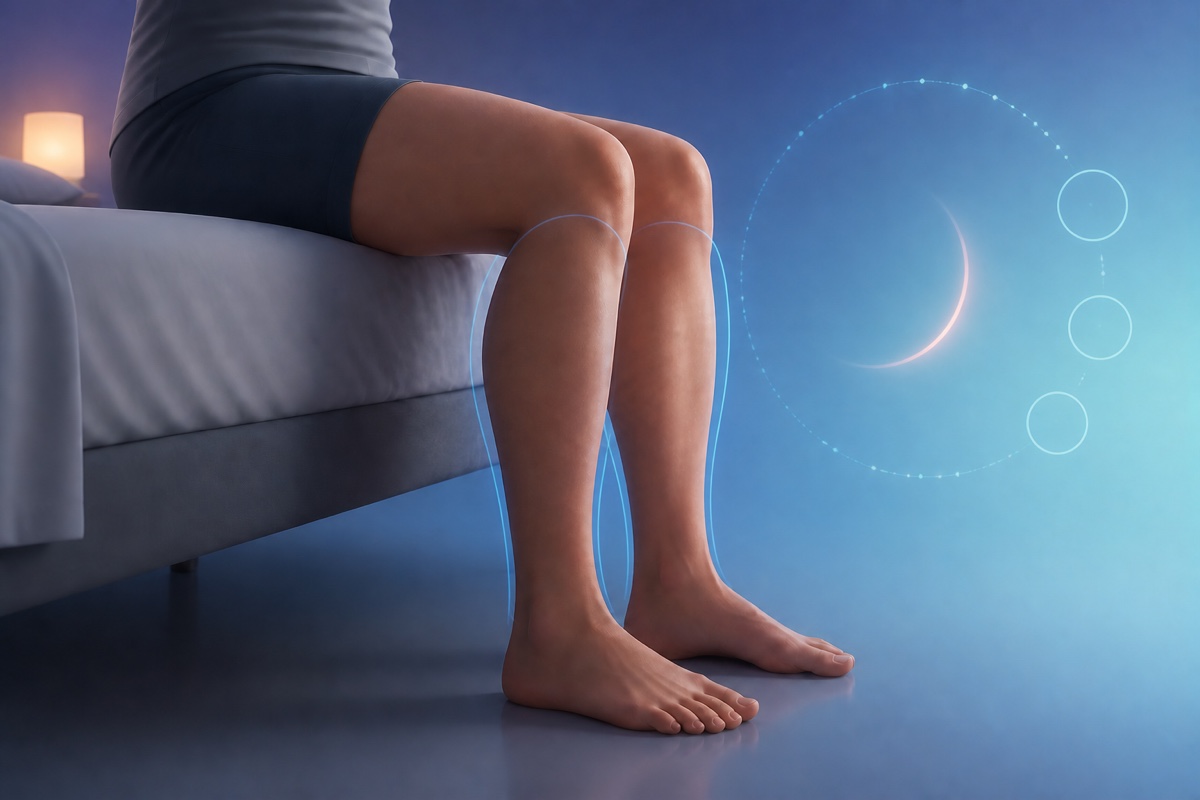
Understanding the restless-legs symptom pattern
Follow the experience from discomfort at rest to the urge to move and the pattern a clinician may review.


Common causes and look-alikes
Several circulation and nerve conditions can cause or mimic restless legs. Tap any card to learn more.
Varicose Veins
Bulging, ropey veins from valves that no longer close properly.
Learn more →Peripheral Neuropathy
Nerve damage causing numbness, tingling, or burning.
Learn more →Chronic Venous Insufficiency
Poor vein return causing swelling, aching, and skin changes.
Learn more →Nerve Compression
Pressure on a nerve causing tingling, pain, or weakness in the leg.
Learn more →When to get it checked
Restless legs itself is rarely an emergency, but seek care if the discomfort comes with any of these:
- Sudden swelling, warmth, or pain in one leg (possible clot or DVT)
- Numbness or weakness in the leg
- A leg or foot that is cold, pale, or blue
- Symptoms that began after starting a new medication
- Significant, ongoing loss of sleep
- Aching, heavy legs and visible veins in the evening
What a specialist can do
A specialist will review your symptoms and sleep, then look for treatable causes. That may include:
- Iron and blood tests: low iron is a common and correctable cause.
- Vein evaluation: an ultrasound can find vein disease that causes restless, aching legs at night.
- Nerve and medication review: to check for neuropathy or contributing medications.
Many people improve with simple lifestyle changes, correcting iron levels, or treating an underlying vein condition. The right plan depends on the cause.
How Help My Legs works
Tell us your symptoms
Answer a few quick questions about what you are feeling and where.
We match you locally
We connect you with a qualified leg and vascular specialist near your ZIP code.
You get seen
The office reaches out to schedule your visit. No obligation, no pressure.
Questions people ask about restless legs
What causes restless legs?
Common causes include low iron, pregnancy, nerve conditions, and certain medications. Vein disease in the legs can also cause similar evening symptoms. An evaluation can identify which factors apply to you.
Can vein problems cause restless legs?
Yes. Vein disease can cause restless, aching, heavy legs that are worse in the evening and at rest. When that is the cause, treating the veins often improves the symptoms.
How is restless legs treated?
Treatment depends on the cause and may include correcting low iron, lifestyle adjustments, treating an underlying vein condition, and in some cases medication. A specialist can build the right plan.
When should I see a doctor?
See a specialist if symptoms disrupt your sleep, keep returning, or come with swelling, numbness, or visible veins. Sudden one-sided swelling with pain needs urgent care.
Legs keeping you up at night?
Get matched with a specialist near you who can look for a treatable cause and help you sleep.
Find a Specialist Near YouLast updated September 2026