

Cold Feet
Feet that feel cold or look pale can simply be a response to cold weather. But persistently cold feet, especially on one side or with color changes, can be a sign of reduced blood flow in the arteries and are worth checking.
What cold feet can tell you
Cold feet in a cold room are normal. Cold feet that persist in a warm environment, or that affect one side more than the other, are the ones worth attention.

When both feet feel cold in cool conditions and warm up easily, it is usually just the body conserving heat. Conditions like Raynaud’s can also make the toes turn white or blue and cold in response to cold or stress.
The National Library of Medicine describes what happens during a Raynaud episode: the blood vessels in your hands and feet react to cold or stress by narrowing quickly.
A foot that stays colder or paler than the other, especially with pain, numbness, or a color change, can point to reduced blood flow in the arteries (peripheral artery disease). That pattern deserves a circulation check, because it is both common and treatable.
Why feet can feel or become unusually cold
Separate a temperature pattern from cold perception, compare possible contributors, and see what may be assessed.
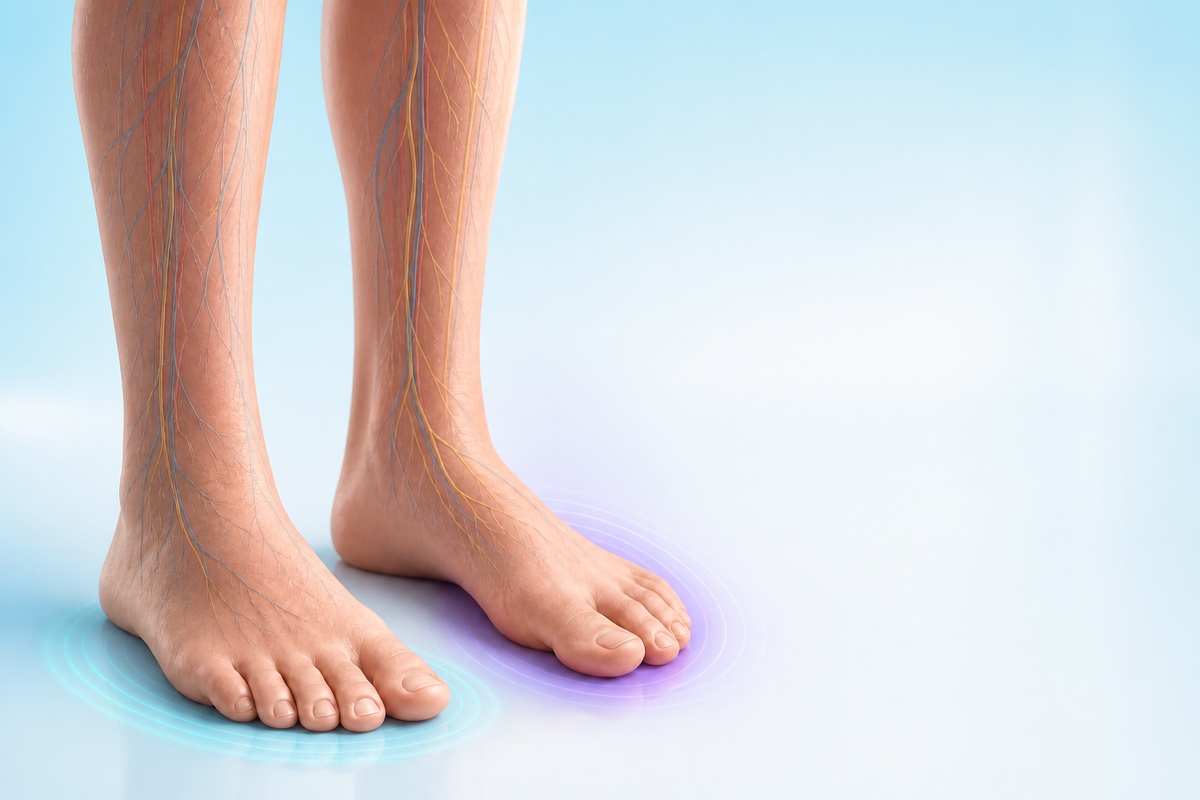
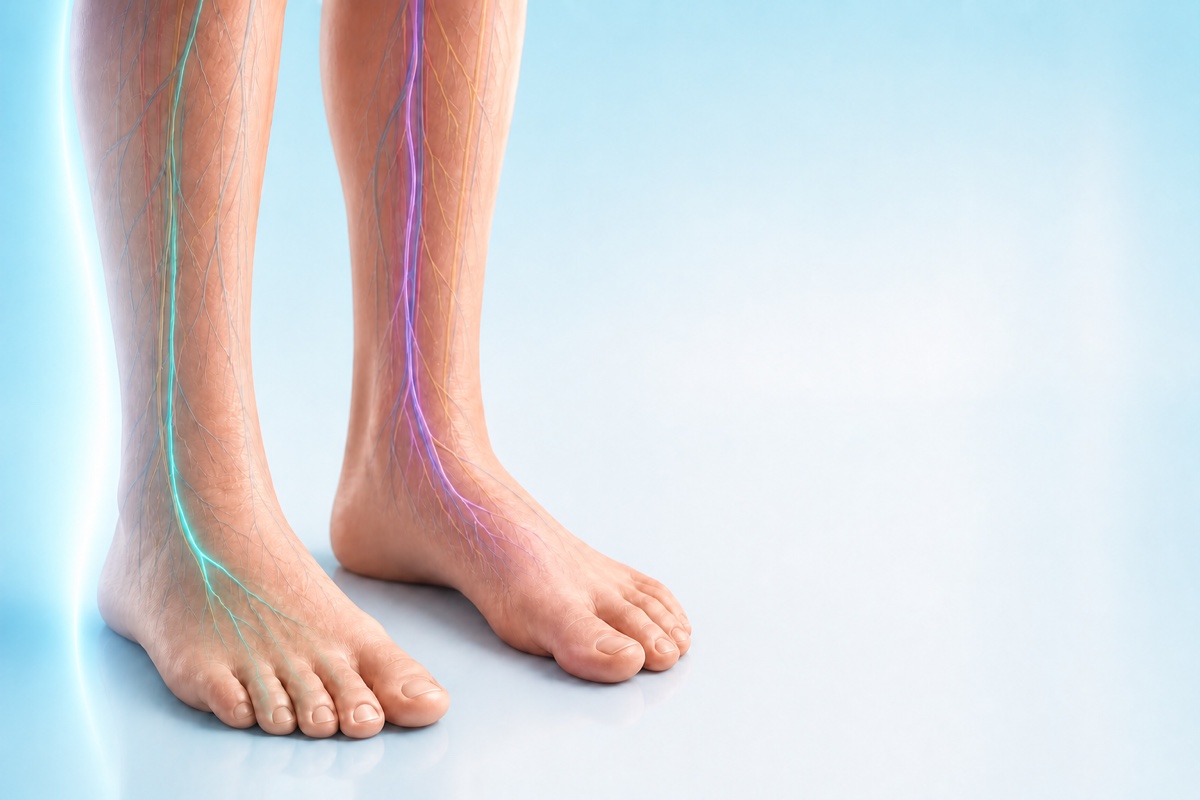
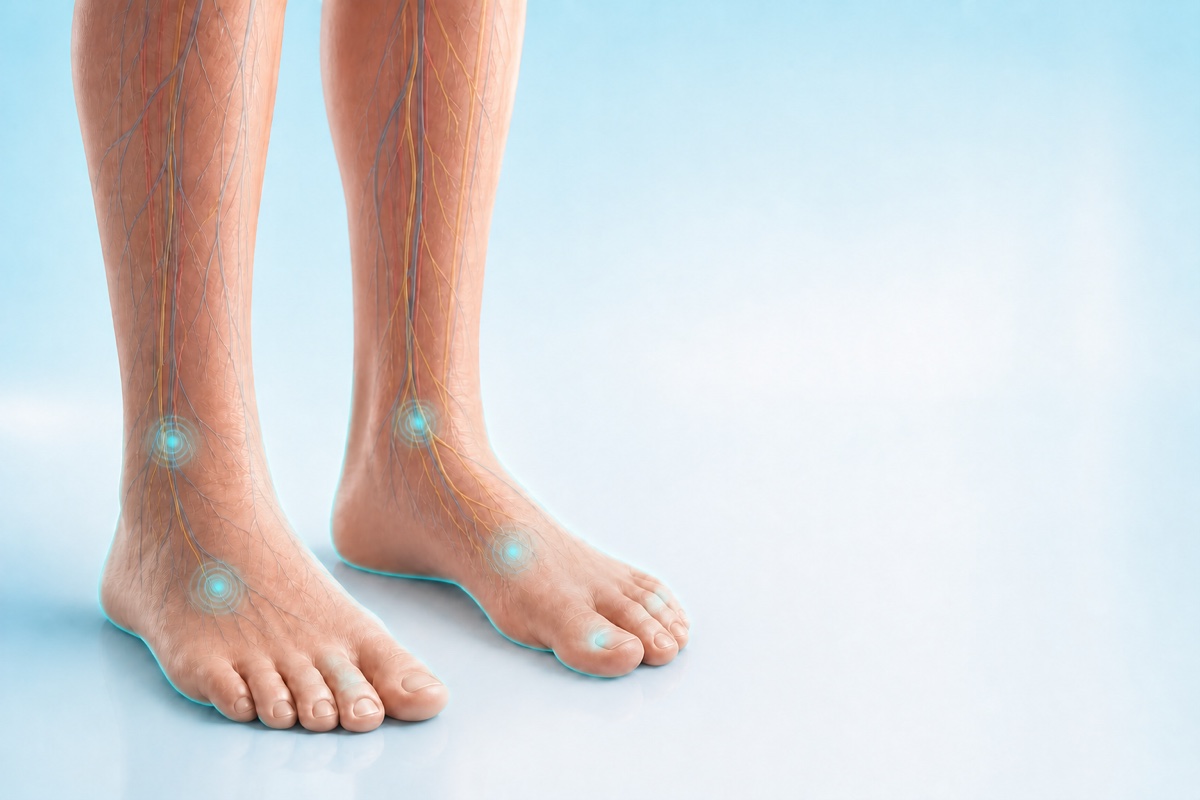
Common causes of cold feet
Several of these are circulation or nerve conditions that a specialist treats. Tap any card to learn more.
When cold feet are an emergency
Some cold-foot symptoms need urgent care. Seek emergency care now if you have:
- A foot that is suddenly cold, pale, and painful (possible blocked artery)
- Toes that are turning blue or black
- A non-healing sore or wound on the foot
- Sudden numbness or weakness in the leg or foot
- One foot that is clearly colder than the other with pain
- Loss of feeling in a cold foot (especially with diabetes)
What a specialist can do
A leg and vascular specialist will feel the pulses in your feet, examine the skin and color, and check circulation with painless tests:
- Ankle-brachial index (ABI): compares blood pressure at the ankle and arm to check the arteries.
- Ultrasound: looks at blood flow to find narrowed or blocked arteries.
- Symptom review: helps tell circulation causes from conditions like Raynaud’s.
If reduced blood flow is found, it is very treatable, often with lifestyle changes, medication, or minimally invasive procedures to restore circulation and protect the foot.
How Help My Legs works
Tell us your symptoms
Answer a few quick questions about what you are feeling and where.
We match you locally
We connect you with a qualified leg and vascular specialist near your ZIP code.
You get seen
The office reaches out to schedule your visit. No obligation, no pressure.
Questions people ask about cold feet
Why are my feet always cold?
Cold feet are often just the body conserving heat, and conditions like Raynaud’s can make the toes cold and pale. But persistently cold feet, especially on one side or with color changes, can point to reduced circulation and are worth checking.
Are cold feet a sign of poor circulation?
They can be. A foot that stays cold or pale, particularly with pain or numbness, may signal reduced blood flow in the arteries. A simple circulation test can tell whether the arteries are involved.
When are cold feet an emergency?
Get emergency care for a foot that is suddenly cold, pale, and painful, or for toes turning blue or black, as these can signal a blocked artery that needs urgent treatment.
How are cold feet treated?
Treatment depends on the cause. If reduced circulation is found, options include lifestyle changes, medication, and minimally invasive procedures to restore blood flow. Other causes are managed accordingly.
Cold feet that will not warm up?
Get matched with a specialist near you who can check your circulation and help.
Find a Specialist Near YouLast updated September 2026