

Peripheral Artery Disease
Peripheral artery disease (PAD) is a narrowing of the arteries that reduces blood flow to the legs. The classic sign is cramping leg pain when walking that eases with rest. It is common, and it is treatable.
What is peripheral artery disease?
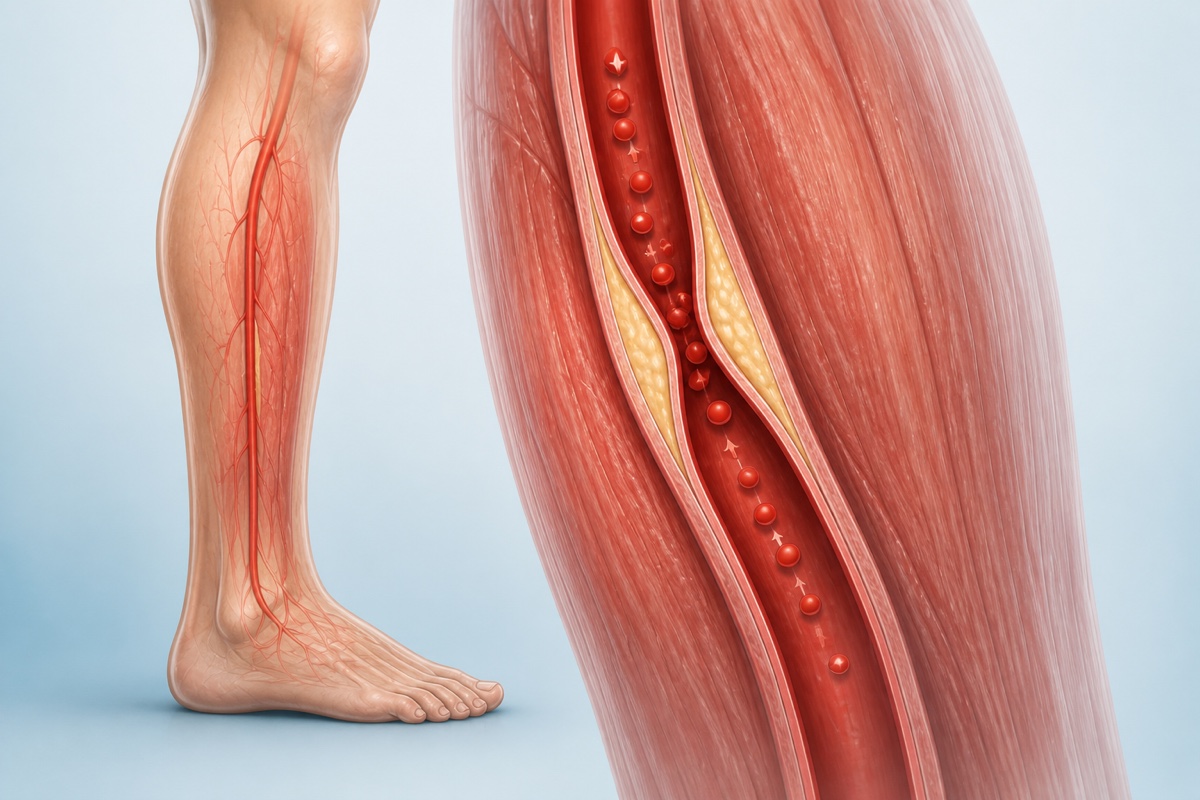
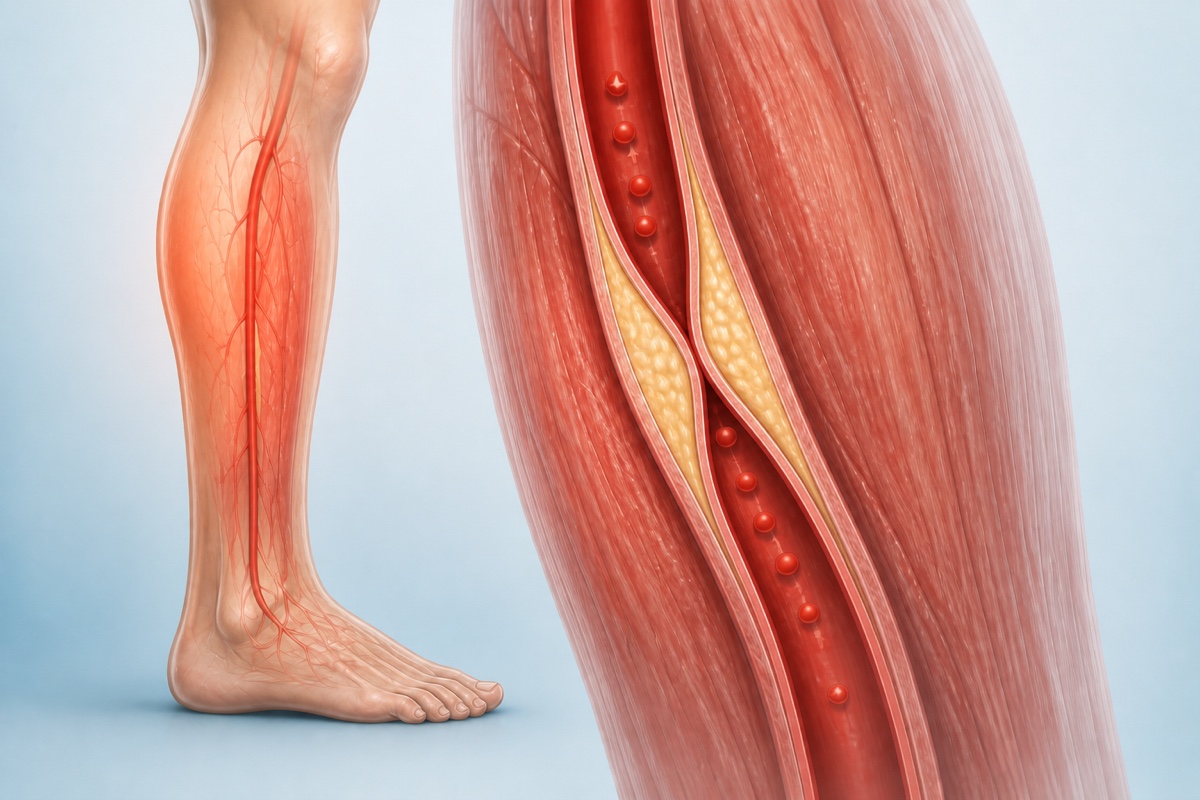
PAD happens when the arteries that carry blood to the legs become narrowed, usually by a buildup of plaque.

With less blood reaching the muscles, many people feel cramping or aching in the calf or thigh when they walk, which eases within a few minutes of rest. This pattern is called claudication. Other signs include cold feet, slow-healing sores, and weak pulses in the feet.
Risk factors include smoking, diabetes, high blood pressure, high cholesterol, and age. Because PAD reflects artery health throughout the body, it is also linked to heart and stroke risk, which is why it is important to have it checked and managed.
Why walking can make PAD hurt
Follow the change from rest to walking to see why a narrowed artery may not deliver enough oxygen for working calf muscles.

When PAD is an emergency
Advanced PAD can threaten the limb. Seek emergency care now if you have:
- A foot that is suddenly cold, pale, and painful (possible blocked artery)
- Toes that are turning blue or black
- Leg or foot pain at rest, especially at night
- A sore or wound on the foot that will not heal
- Numbness or weakness with a cold, pale foot
- Signs of infection in a foot wound
How PAD is diagnosed and treated
PAD is checked with simple, painless tests such as an ankle-brachial index and ultrasound. Treatment aims to relieve symptoms, protect the limb, and lower heart and stroke risk:
- Lifestyle steps: a supervised walking program and quitting smoking make a big difference.
- Medication: to improve blood flow and manage blood pressure, cholesterol, and diabetes.
- Minimally invasive procedures: angioplasty or a stent can reopen a narrowed artery when needed.
With the right care, most people walk farther with less pain and lower their risk of serious complications.
What to expect at your first visit
Most people have never had their leg circulation checked, and not knowing what happens is a common reason to put the appointment off.
The main test is an ankle-brachial index, usually shortened to ABI. A blood pressure cuff goes on your arm and another on your ankle, and the two readings are compared. The difference shows how well blood is reaching your feet. It takes a few minutes, nothing breaks the skin, and you stay dressed apart from removing your shoes and socks.
If the ABI suggests reduced flow, the usual next step is an ultrasound. A technician moves a small probe over your leg with some gel, and the images show where an artery has narrowed and by how much. This is also painless.
You will be asked how far you can walk before the pain starts, whether it eases when you stop, and whether you have any sores that are slow to heal. It is worth thinking about those answers beforehand, because your walking distance is one of the most useful pieces of information a specialist can have.
Why PAD is about more than your legs
The same process that narrows the arteries in your legs can narrow arteries elsewhere in the body. That is why PAD is taken seriously even when the leg symptoms are mild.
People with PAD carry a higher risk of heart attack and stroke than people without it. That is not a prediction about you, and it is not a reason to panic. It is the reason treatment usually addresses blood pressure, cholesterol and blood sugar alongside the leg symptoms themselves.
There is a more useful way to look at it. Leg pain when walking is an early warning that tends to arrive while there is still time to act on it. For a lot of people, the aching calf is what finally got the rest of their circulation looked at.
How PAD differs from other causes of leg pain
Leg pain has several common causes and they are treated very differently, so telling them apart is the first job.
PAD pain is brought on by walking and relieved by standing still. The distance before it starts is often fairly consistent, and the feeling is usually a cramp or an ache in the calf or thigh.
Nerve pain from peripheral neuropathy tends to burn or tingle, is often worse at night, and does not depend on how far you have walked. Pain from a compressed nerve in the lower back often travels down the leg and changes with position, such as when you bend forward or sit down.
Vein problems such as chronic venous insufficiency usually cause aching and heaviness that build through the day and ease when you put your legs up. That is close to the opposite of the PAD pattern.
None of these rules is absolute, and it is common to have more than one thing going on at once. Sorting that out is what the examination is for.
How Help My Legs works
Tell us your symptoms
Answer a few quick questions about what you are feeling and where.
We match you locally
We connect you with a qualified leg and vascular specialist near your ZIP code.
You get seen
The office reaches out to schedule your visit. No obligation, no pressure.
Related leg symptoms
This condition can show up as one or more of these symptoms. Tap any card to learn more.
Read more about PAD
Longer guides on the symptoms people notice first.
Leg Pain When Walking
Why cramping that starts when you walk and eases when you stop points at your arteries.
Read the article →Burning Feet: Nerves or Circulation?
How to tell a nerve problem from a circulation problem when your feet burn.
Read the article →Does Medicare Cover Treatment?
What Part B covers for poor leg circulation, and the five things that change what you actually owe.
Read the article →Legs and Feet Changing Color
What pale, red, purple and blue changes can mean, and which ones need care the same day.
Read the article →Questions people ask about PAD
What is the main sign of PAD?
The classic sign is cramping or aching in the calf or thigh that comes on with walking and eases with rest. Cold feet and slow-healing sores can also occur.
Who is at risk for PAD?
Smoking, diabetes, high blood pressure, high cholesterol, and older age all raise the risk. PAD is also linked to heart and stroke risk.
How is PAD treated?
Treatment includes a walking program, quitting smoking, medication, and, when needed, minimally invasive procedures to reopen narrowed arteries.
Is PAD serious?
It can be. Untreated PAD can progress and threaten the limb, and it signals higher heart and stroke risk. The good news is that it is very treatable when caught.
Leg pain when you walk?
Get matched with a specialist near you who can check your circulation and help you walk comfortably again.
Find a Specialist Near YouLast updated September 2026