

Varicose Veins
Varicose veins are enlarged, twisted veins that bulge under the skin, usually on the legs. They form when the valves inside the veins weaken and blood pools. They can ache, throb, and cause heaviness, and they are very treatable.
What are varicose veins?
Varicose veins are swollen, rope-like veins that you can often see and feel raised under the skin.
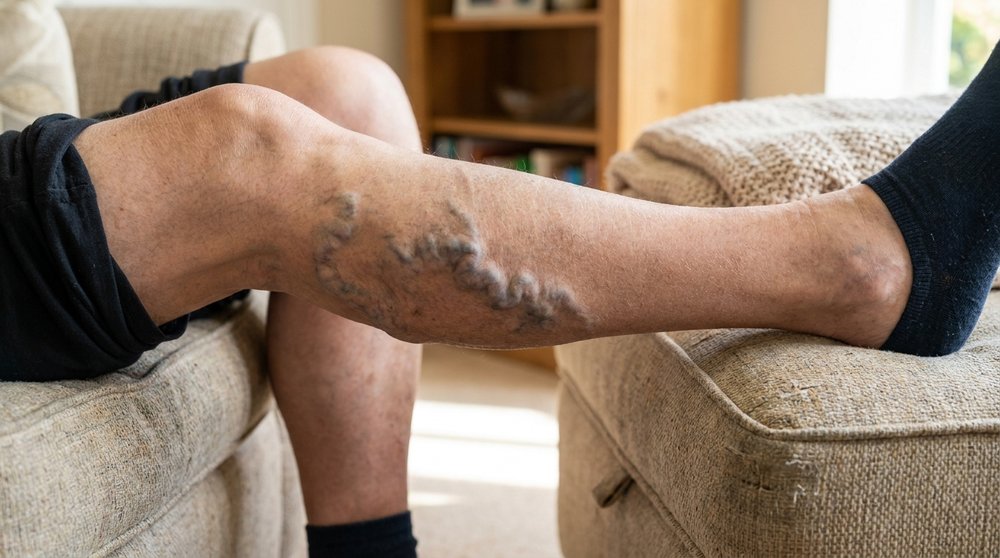
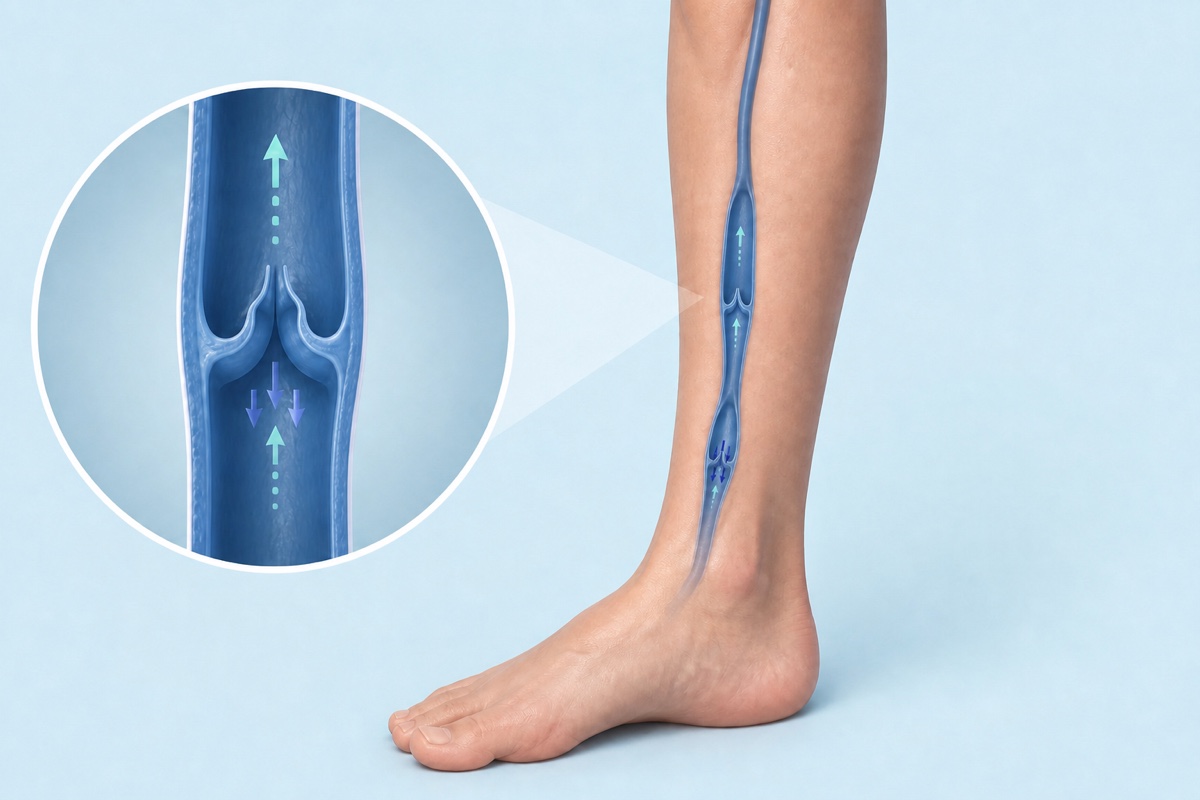
Healthy leg veins have one-way valves that keep blood moving up toward the heart. When those valves weaken, blood flows backward and pools, stretching the vein until it bulges. This is called venous reflux.

Besides their appearance, varicose veins can cause aching, throbbing, heaviness, itching, and swelling that is worse after standing and better with elevation. Risk factors include family history, age, pregnancy, and jobs that involve long periods of standing.
How weakened vein valves can cause pooling
Follow blood return through a superficial leg vein to see how incomplete valve closure may change flow.


When varicose veins need prompt care
Most varicose veins are not an emergency, but seek prompt care if you have:
- Bleeding from a varicose vein
- A skin sore or ulcer near the ankle
- A vein that is hard, red, warm, and tender (possible phlebitis)
- Sudden swelling and pain in one leg (possible clot or DVT)
- Skin darkening or hardening around the ankle
- Worsening swelling that does not improve with elevation
How varicose veins are treated
Treatment has come a long way, and most procedures are now minimally invasive and done in an office. A specialist confirms the diagnosis with a painless ultrasound, then may recommend:
- Compression stockings and lifestyle steps: to ease symptoms and slow progression.
- Endovenous ablation: uses heat or a sealant to close the faulty vein, which the body reroutes.
- Sclerotherapy or phlebectomy: to treat smaller or bulging surface veins.
These procedures are quick, need little downtime, and often relieve the aching and heaviness as well as the appearance.
Why varicose veins happen
Blood has to travel back up your leg against gravity, and the veins have one-way valves inside them to stop it falling back down.
The muscles in your calf do the pumping. Every step squeezes the deep veins and pushes blood upward, and the valves hold each gain in place. It is an efficient system that depends entirely on those valves closing behind the flow.
When a valve stops sealing, blood falls back and pools in the vein below it. Pressure inside that vein rises, the wall stretches, and a stretched vein holds its valves further apart, so the next one down fails too. That is why varicose veins tend to appear gradually and then accelerate.
Some things make it more likely, and most of them are not lifestyle choices. A family history is the strongest single factor. Pregnancy raises blood volume and relaxes vein walls. Work that keeps you standing or sitting still for hours removes the calf pump from the equation. Age, height and carrying extra weight all add to the load. None of this is caused by crossing your legs, which is a persistent myth.
The symptoms people do not connect to their veins
Visible veins are the obvious sign. They are often not the first one, and several common symptoms get put down to age instead.
A heavy, tired feeling in the legs that builds through the day and eases overnight is one of the most typical. So is aching after a long stretch on your feet, and swelling around the ankle that is gone by morning and back by evening.
Less expected: itching or a dry, flaky patch of skin above the ankle, night cramps in the calf, and a restless, need-to-move sensation in the legs in the evening. Each of these has other causes too, which is exactly why they get attributed elsewhere. Seen together with any visible vein change, they point in one direction.
The pattern is the useful part. Venous symptoms are worse the longer you are upright and better when you lie down or put your legs up. Symptoms that are equally bad first thing in the morning are usually telling you about something else. Our pages on heavy legs and leg swelling go through the alternatives.
What happens if they are left alone
Most varicose veins are not dangerous, and plenty of people live with them for decades without trouble. But they are progressive rather than static, and a few complications are worth recognising early.
The most common change is in the skin around the ankle, where pressure is highest. It can darken to a brown or rusty colour, become dry and itchy, or thicken and feel tight. Those changes are the leg telling you the pressure has been raised for a long time, and they are much easier to halt than to reverse.
A vein close to the surface can also become inflamed and clot, leaving a hard, hot, tender cord under red skin. That is uncomfortable rather than dangerous in most cases, but it needs assessment, because occasionally it extends toward the deep veins.
The outcome worth avoiding is a venous ulcer: a shallow, slow-healing sore near the ankle that appears after years of raised pressure and skin change. Treated early the picture is good. Left for months it becomes a long, difficult problem. A sore near the ankle that has not healed in two weeks is a reason to be seen, not a reason to wait.
What you can do yourself, and what it will not do
Self-management genuinely helps symptoms. It does not repair a valve, and it is worth knowing which is which so you can judge whether it is enough for you.
Properly fitted compression stockings do real work by supporting the calf pump, and they are the single most effective thing you can do without a procedure. Walking helps for the same reason. Putting your legs above hip level for twenty minutes in the afternoon reduces how much fluid has collected by evening. Losing excess weight reduces the load on the whole system.
What none of this does is close a failed valve. Symptoms return when you stop, the visible veins stay, and the underlying pressure is unchanged. That is not an argument against doing it. It is the reason to think of it as management rather than treatment, and to know that the choice to move on to a procedure remains open whenever you want it.
Things sold as vein creams, supplements and tonics do not close veins either, and the evidence behind them is thin. Spending money there instead of on a properly fitted stocking is the common mistake.
How Help My Legs works
Tell us your symptoms
Answer a few quick questions about what you are feeling and where.
We match you locally
We connect you with a qualified leg and vascular specialist near your ZIP code.
You get seen
The office reaches out to schedule your visit. No obligation, no pressure.
Related leg symptoms
This condition can show up as one or more of these symptoms. Tap any card to learn more.
Questions people ask about varicose veins
Are varicose veins dangerous?
They are usually not dangerous, but they can be uncomfortable and can worsen over time. Occasionally they lead to skin changes, ulcers, or clots, so it is worth having them evaluated if they cause symptoms.
What causes varicose veins?
They form when one-way valves in the leg veins weaken and blood pools. Family history, age, pregnancy, and long periods of standing all raise the risk.
How are varicose veins treated?
Options range from compression stockings to minimally invasive office procedures like endovenous ablation and sclerotherapy that close the faulty veins with little downtime.
Will they come back after treatment?
Treated veins are closed for good, but new varicose veins can form over time. Follow-up and lifestyle steps help keep them in check.
Do varicose veins get worse if I leave them?
They tend to be progressive rather than static, though the pace varies enormously and many people stay comfortable for years. What is worth watching is the skin around the ankle. Darkening, dryness or thickening there means pressure has been raised for a long time, and those changes are far easier to halt than to reverse. A sore near the ankle that has not healed in two weeks should be seen.
Do compression stockings fix varicose veins?
They control the symptoms rather than fix the vein. Compression supports the calf muscle pump, which reduces aching, heaviness and swelling, and it is the single most effective thing you can do without a procedure. It does not close a failed valve, so symptoms return when you stop. That makes it genuine management, not treatment, and the choice to move on to a procedure stays open.
Aching, bulging veins slowing you down?
Get matched with a specialist near you who can evaluate your veins and explain your treatment options.
Find a Specialist Near YouLast updated September 2026