

Lymphedema
Lymphedema is swelling that builds up when the lymphatic system cannot drain fluid properly, most often in an arm or leg. It tends to be persistent and can worsen over time, but with the right care it can be managed well.
What is lymphedema?
Lymphedema is a buildup of lymph fluid in the tissues, usually because the lymphatic drainage system is blocked or damaged.

Unlike everyday swelling that eases overnight, lymphedema tends to be persistent and can gradually worsen. It often starts with a feeling of heaviness or tightness and can progress to firmer swelling and thickened skin. It usually affects one limb more than the other.
It can be present from birth (primary) or, more commonly, develop after surgery, radiation, infection, or damage to the lymph nodes (secondary). People with lymphedema are also more prone to skin infections, so protecting the skin is an important part of care.
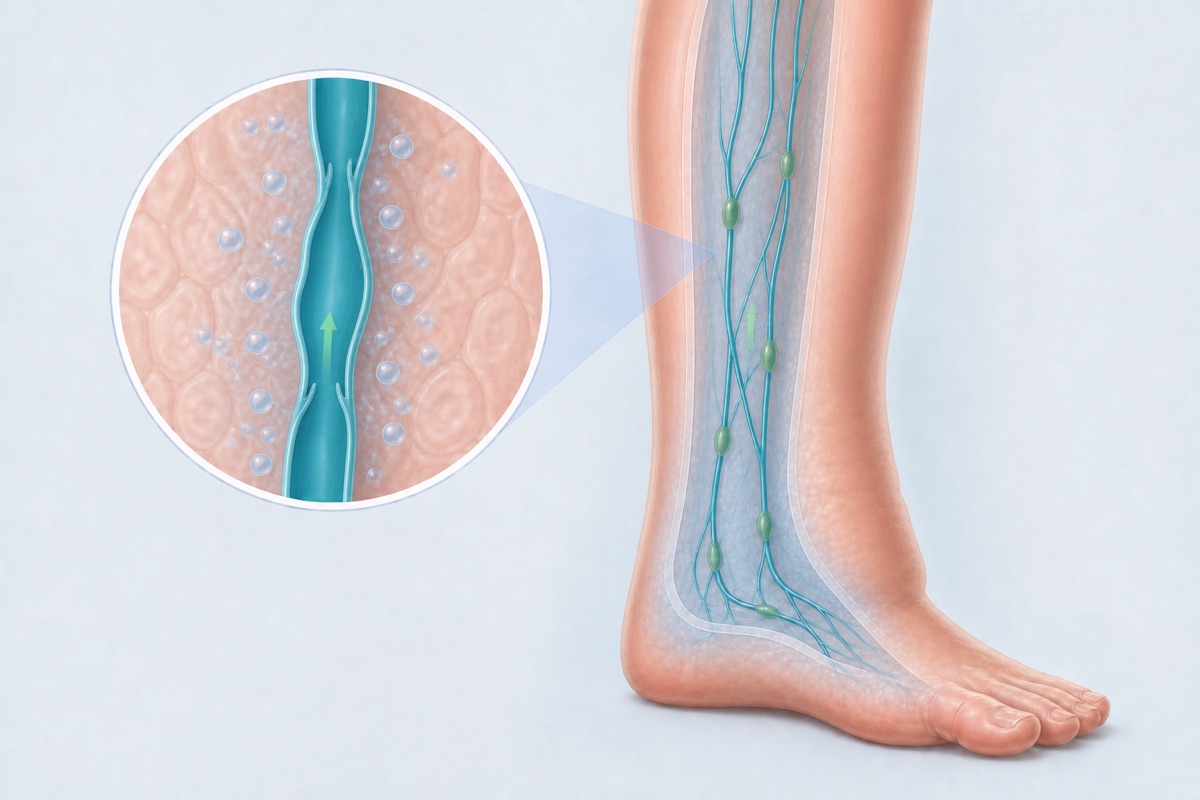
How slowed lymph drainage can cause swelling
Move through four stages to see how lymphatic vessels collect tissue fluid, what changes when drainage slows, and how specialist-guided care may help control swelling.



When lymphedema needs urgent care
Lymphedema itself is managed over time, but seek prompt care if you have:
- Skin that is red, hot, and tender with fever (possible cellulitis)
- A rapid increase in swelling
- An open wound or sore on the swollen limb
- Sudden swelling and pain in one leg (possible clot)
- Spreading redness or streaking on the skin
- Increasing pain in the swollen area
How lymphedema is managed
Lymphedema is best managed with a consistent, specialist-guided routine that reduces swelling and protects the skin:
- Compression: garments or wraps to control swelling and support the limb.
- Manual lymphatic drainage: a gentle massage technique that helps move fluid.
- Skin care and exercise: to prevent infection and keep the limb moving.
A specialist can rule out other causes of swelling, confirm the diagnosis, and set up a plan you can maintain at home.
How Help My Legs works
Tell us your symptoms
Answer a few quick questions about what you are feeling and where.
We match you locally
We connect you with a qualified leg and vascular specialist near your ZIP code.
You get seen
The office reaches out to schedule your visit. No obligation, no pressure.
Related leg symptoms
This condition can show up as one or more of these symptoms. Tap any card to learn more.
Questions people ask about lymphedema
How is lymphedema different from regular swelling?
Everyday swelling usually eases overnight. Lymphedema tends to be persistent, can worsen over time, and often affects one limb, with heaviness and, later, skin thickening.
What causes lymphedema?
It can be present from birth or develop after surgery, radiation, infection, or damage to the lymph nodes. An evaluation helps identify the cause.
Can lymphedema be cured?
There is no cure, but it can be managed very effectively with compression, manual lymphatic drainage, skin care, and exercise to control swelling and prevent complications.
Why is skin care important?
Swollen tissue is more prone to infection. Good skin care and prompt attention to any redness or wounds help prevent cellulitis.
Persistent swelling in a leg?
Get matched with a specialist near you who can find the cause and set up a plan to manage it.
Find a Specialist Near YouLast updated August 2026