
Heavy Legs
Legs that feel heavy, tired, or weighed down, especially after standing or by the end of the day, are often a sign that the veins are not returning blood as efficiently as they should. It is common and very treatable.
What heavy legs feel like
Heavy legs feel tired and weighed down, as if it takes extra effort to move them, often with aching or mild swelling.

The classic pattern is heaviness that builds through the day and eases when you elevate your legs or rest overnight. This points to the veins, where weakened valves let blood pool in the legs instead of flowing back to the heart. It often comes alongside swelling, aching, or visible varicose veins.
The National Heart, Lung, and Blood Institute lists that combination directly, noting that compression can relieve: pain, swelling, and heaviness in the legs.
Heavy legs can also relate to being on your feet all day, weight, and activity level. Less often, reduced blood flow in the arteries can cause tired, heavy legs with walking. A specialist can tell which is at play.
Why legs can feel heavy or weighed down
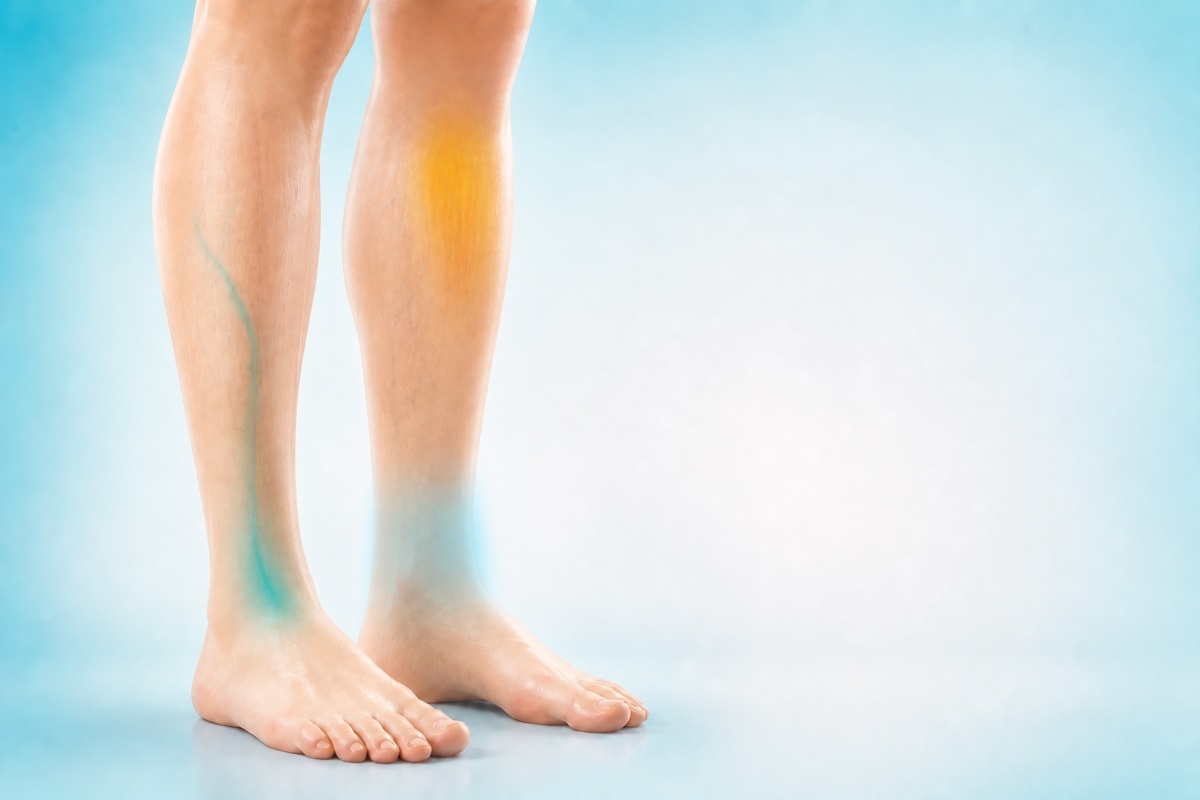
Follow the heaviness pattern, compare several possible contributors, and see what a clinician may assess.
Common causes of heavy legs
Several of these are circulation conditions that a specialist treats. Tap any card to learn more.
Varicose Veins
Bulging, ropey veins from valves that no longer close properly.
Learn more →Deep Vein Thrombosis
A clot in a deep leg vein, which is a medical emergency.
Learn more →Peripheral Neuropathy
Nerve damage causing numbness, tingling, or burning.
Learn more →Peripheral Artery Disease
Narrowed arteries reduce blood flow, often felt as pain when walking.
Learn more →Chronic Venous Insufficiency
Poor vein return causing swelling, aching, and skin changes.
Learn more →Lymphedema
Swelling from a build-up of lymph fluid in the tissues.
Learn more →Nerve Compression
Pressure on a nerve causing tingling, pain, or weakness in the leg.
Learn more →When heavy legs need prompt care
Heaviness is usually not an emergency, but seek prompt care if it comes with:
- Sudden swelling, warmth, or pain in one leg (possible clot or DVT)
- Chest pain or shortness of breath
- Skin changes, darkening, or an open sore near the ankle
- A leg or foot that is cold, pale, or blue
- Sudden weakness or numbness in the leg
- Heaviness that only comes on with walking and eases with rest
Heaviness from the veins, the lymph system and the arteries keeps three different schedules
Heavy legs are one sensation produced by at least three separate mechanisms, and the feeling itself does not say which one is yours. What does say something useful is timing: when in the day it is at its worst, and what makes it let go. Those two answers aim the first test, which is most of the value of thinking about it before you go in.
Heaviness from the veins is a drainage problem, and it builds. MedlinePlus explains the mechanism plainly: veins have one-way valves that help keep blood flowing toward your heart, and if the valves are weak or damaged, blood can back up and pool in your veins. Gravity makes that worse the longer you are upright, so this kind of heaviness is mildest in the morning, worst by evening, and tends to ease when the legs are raised. MedlinePlus lists elevating the legs when resting among the measures that help.
Heaviness from the lymph system keeps a different schedule, because the fluid involved is not as easily shifted. Lymphedema is swelling that happens when lymph builds up in your body’s soft tissues, which can occur when the lymph system is damaged or blocked. The practical difference people notice is that it does not reset overnight the way vein-related heaviness does, it often involves the forefoot and the toes rather than stopping at the ankle, and over time the skin itself can thicken rather than simply swelling and going down again.
Heaviness from the arteries is tied to effort rather than to the clock. Among the symptoms of peripheral arterial disease, MedlinePlus lists pain, numbness, achiness, or heaviness in the leg muscles, and notes that this happens when walking or climbing stairs. The signature is that it arrives at a fairly predictable distance, that standing still relieves it without needing to sit or raise the leg, and that it then returns at about the same distance again.
So three questions are worth answering before the appointment. Is it worst at the end of the day, or after a certain distance? Is it still there first thing in the morning, before you have been on your feet? And is one leg visibly larger than the other, or are both the same? The honest caveat is that these overlap, more than one can be true at once, and none of them is a diagnosis. They decide which examination happens first, and that is a real saving in a short appointment.
What a specialist can do
A leg and vascular specialist will examine your legs and veins and, in most cases, use a painless ultrasound to see how the veins are working:
- Venous ultrasound: checks for weakened valves and pooling blood, the usual cause of heaviness.
- Exam and history: looks for varicose veins, swelling, and skin changes.
- Circulation check: rules out an artery cause if heaviness comes with walking.
Vein-related heaviness responds well to compression, lifestyle steps, and modern minimally invasive procedures that close off faulty veins in an office visit, with little downtime.
How Help My Legs works
Tell us your symptoms
Answer a few quick questions about what you are feeling and where.
We match you locally
We connect you with a qualified leg and vascular specialist near your ZIP code.
You get seen
The office reaches out to schedule your visit. No obligation, no pressure.
Questions people ask about heavy legs
Why do my legs feel heavy and tired?
The most common reason is vein disease, where weakened valves let blood pool in the legs. This causes heaviness that builds through the day and eases with elevation. Standing all day, weight, and activity level can add to it.
Are heavy legs a sign of vein problems?
Often yes. Heaviness that is worse after standing and better with elevation, especially with swelling or visible veins, points to the veins. An ultrasound can confirm it.
What helps heavy legs?
Moving regularly, elevating your legs, and wearing compression stockings can help. If a vein condition is the cause, treating it is the most effective step and can relieve the heaviness for good.
When should I see a doctor?
See a specialist if heaviness is persistent, comes with swelling, aching, or visible veins, or affects daily life. Sudden one-sided swelling with pain needs urgent care.
Legs feeling heavy and tired?
Get matched with a specialist near you who can find out why and help you feel lighter on your feet.
Find a Specialist Near YouLast updated November 2026