
You pull your socks off at the end of the day and your feet are hot. Not warm, burning. Some evenings it is a prickling heat across the soles, some evenings it feels like the skin itself is on fire, and it is usually worst once you are lying still in bed.
Burning feet is one of those symptoms that gets shrugged off for years. It gets blamed on shoes, on long days, on getting older. The useful question is narrower than any of those, and it is the one this page is about: with burning feet, nerves or circulation is the divide that matters, because the two lead to different tests and different treatment.
What burning feet actually mean
Burning is a nerve sensation. Whatever is behind it, what you are feeling is nerves in your feet firing when they should be quiet.
That is why the two main explanations arrive at the same feeling. Either the nerves themselves are damaged or irritated, or the blood supply that feeds them is falling short, and starved nerves misfire in much the same way damaged ones do.
It is also why the burning on its own cannot tell you which one you have. The pattern around it can, and with burning feet, nerves or circulation is usually a question you can narrow down well before anyone examines you. If you want the wider view of this symptom higher up the leg as well as in the feet, we cover the burning sensation in legs separately.
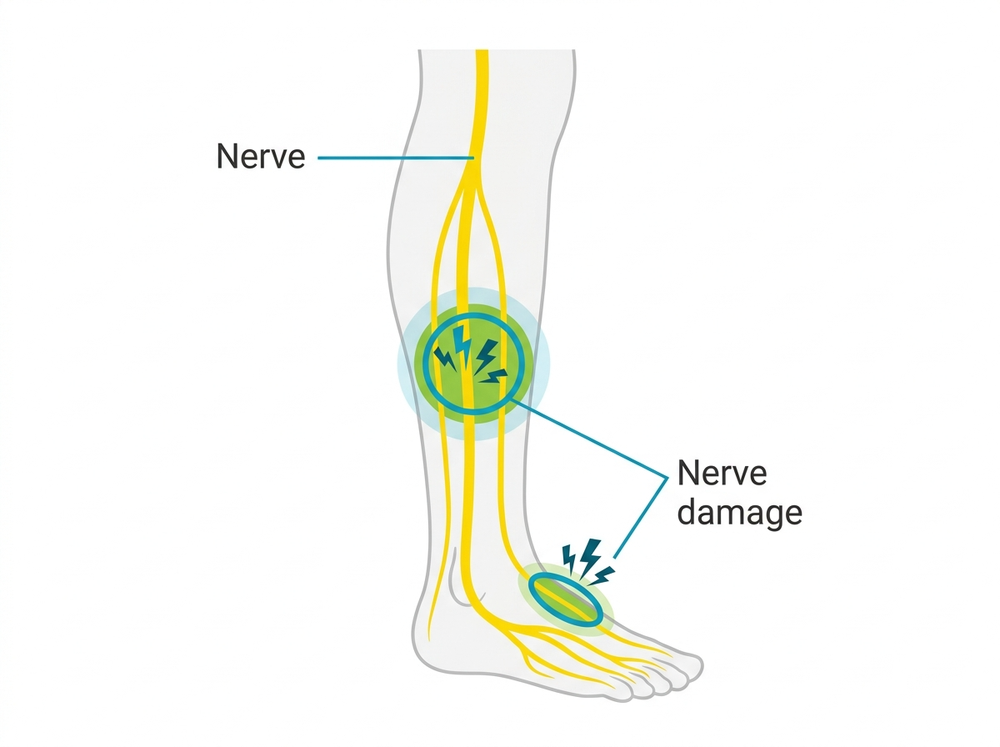
Burning feet: nerves or circulation, five clues that tell them apart
No single clue settles this. Taken together, these five usually lean the burning feet nerves or circulation question one way or the other.
1. When it is at its worst. Nerve-related burning is classically worse at night and at rest. The National Institute of Diabetes and Digestive and Kidney Diseases notes that with peripheral neuropathy the feet may feel burning or tingling, and that symptoms are often worse at night.
2. What walking does to it. Circulation trouble tends to announce itself with movement. Cramping or aching in the calf or thigh that comes on after a predictable distance and eases within a few minutes of stopping is the classic circulation pattern, and we walk through it in leg pain when walking. Nerve burning usually carries on whether you are moving or sitting.
3. Temperature and color. Reduced blood flow shows on the surface. One foot may feel colder than the other, and the foot may look pale, discolored, or bluish. Feet affected by nerve damage alone usually look and feel normal. Persistent cold feet alongside the burning is a point toward circulation.
4. Whether you have lost feeling as well as gained a symptom. Nerve damage usually takes something away as well as adding something. Numbness, reduced sensation, or difficulty telling hot from cold in the same area points toward peripheral neuropathy rather than blood flow.
5. The rest of your health. Diabetes, low vitamin B12, chemotherapy, and heavy alcohol use are common reasons nerves get damaged. Smoking, high blood pressure, high cholesterol, and existing heart or artery disease push toward peripheral artery disease.
One honest caveat belongs here. These two overlap constantly, and diabetes is the main reason why: it damages nerves and small blood vessels at the same time. A great many people have some of both. The clues narrow the question rather than close it, which is exactly why it is worth having someone check properly instead of deciding at home.
When burning feet need urgent attention
Most burning feet is not an emergency. A few situations are.
A foot that suddenly becomes painful and is also pale, cold, or numb needs same-day emergency care. A sharp drop in blood flow to a foot is a limb emergency, not something to sleep on.
A sore or ulcer on the foot that is not healing should be looked at promptly, particularly if you have diabetes or a known circulation problem. Numb feet hide injuries, and a small wound can get established before you notice it.
Sudden swelling in one leg with pain, warmth, or redness in the calf needs same-day attention for a different reason. That combination can indicate deep vein thrombosis, a clot in a deep leg vein, which is very treatable but dangerous to ignore.
New numbness around the groin or inner thighs, or a change in bladder or bowel control alongside leg symptoms, needs emergency assessment. That points at the spinal cord rather than the foot.
How Help My Legs works
Tell us your symptoms
Answer a few quick questions about the burning, when it is worst, and what else you have noticed in your feet.
We match you locally
We connect you with a qualified leg and circulation specialist near your ZIP code.
You get seen
The office reaches out to schedule your visit. No obligation, no pressure.
What treatment can look like
With burning feet, nerves or circulation is not a distinction that only matters on paper. The two answers lead in genuinely different directions, which is the reason it is worth settling rather than living around.
On the nerve side, treatment goes after the cause wherever there is one to go after. Tighter blood sugar control, correcting a B12 deficiency, reviewing medications that can affect nerves. Specific medications can quiet the burning itself, and daily foot checks become part of ordinary routine, because feet that have lost sensation cannot warn you about a blister or a stone in a shoe.
On the circulation side, the first step is quick and completely painless. A circulation check compares the blood pressure at your ankle with the pressure in your arm, and an ultrasound can show whether an artery has narrowed and where. If the arteries turn out to be the problem, treatment for poor leg circulation is usually a minimally invasive procedure done through a small puncture, not open surgery, and most people go home the same day.
Neither path begins with a decision about a procedure. Both begin with finding out which path you are actually on.
When it is neither nerves nor circulation
Two other explanations are worth knowing, because they point somewhere else entirely.
Burning that travels down from the lower back or the buttock into the foot, usually on one side, often comes from nerve compression higher up rather than from anything happening in the foot itself. The give-away is the path it follows.
Burning that arrives in the evening with a strong urge to move your legs, and that eases the moment you get up and walk, is a different pattern again and sits closer to restless legs than to either explanation above.
If you are not sure which of these sounds like you, our quick candidate check runs through it in about a minute.
Questions people ask
Are burning feet a sign of poor circulation?
They can be, but burning is more often a nerve symptom than a circulation one. The clues that point toward circulation are a foot that is cold, pale, or discolored, and cramping in the calf that comes on when you walk and settles when you stop. Burning with numbness and no color change points more toward the nerves.
Why are my feet burning at night?
Nerve-related burning is typically worse at night and at rest, partly because there is nothing else competing for your attention once you lie down. Night burning on its own does not confirm nerve damage, but it is one of the more useful clues.
With burning feet, nerves or circulation: which is more likely?
Nerve damage is the more common single explanation, and diabetes is the most common reason for it. Circulation is the more urgent one to rule out, because narrowed leg arteries are treatable and carry wider risks for your heart. Many people have some of both, which is why the two are usually assessed together.
When should I see a specialist about burning feet?
If the burning is disturbing your sleep, spreading, or coming with numbness, color changes, or a sore that is not healing, it is worth having your nerves and your circulation checked. A foot that turns suddenly cold, pale, and painful needs emergency care the same day.